
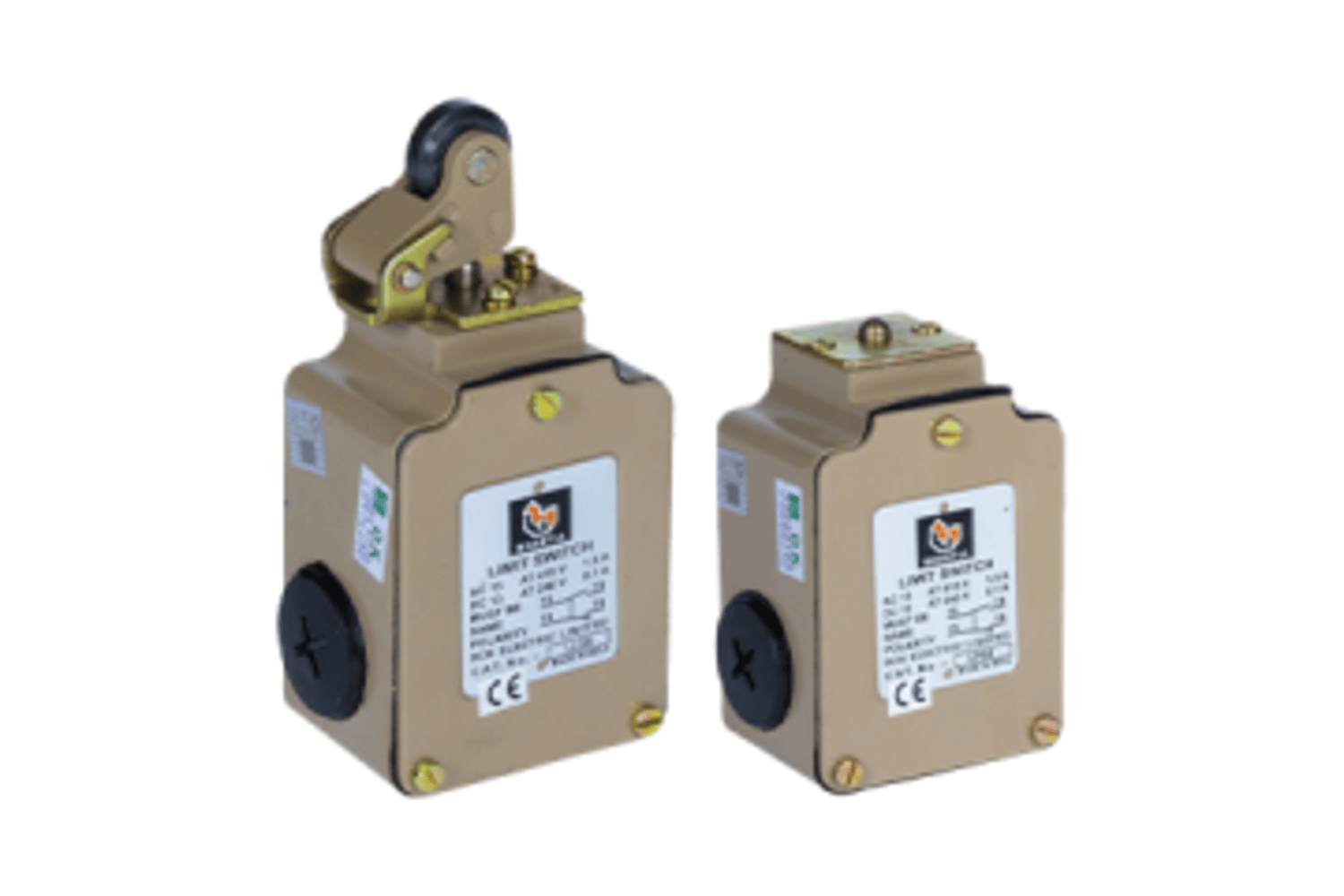
In modern industrial environments, precision, safety, and automation are essential for maintaining efficient operations. Industrial machines operate continuously under demanding conditions, and even a small error in positioning or motion control can lead to equipment damage, safety hazards, or costly downtime. One of the simplest yet most effective devices used to prevent such issues is the limit switches. These electromechanical devices detect the presence or position of moving components and trigger electrical signals that control machine operations.
Despite their simple design, limit switches solve numerous critical problems in industrial systems. In this article, we explore 10 common industrial problems solved by limit switches, and why they remain indispensable in factories, warehouses, and production facilities.
What Is a Limit Switch?
A limit switch is an electromechanical device used to detect the physical position or movement of an object. When a moving component touches the switch actuator—such as a lever, roller, or plunger—the internal contacts change state, sending a signal to control systems.
Limit switches are commonly used in:
-
Conveyor systems
-
Packaging machinery
-
Cranes and hoists
-
Industrial presses
-
Automated production lines
-
Robotics systems
They play a crucial role in ensuring machine safety, precision, and operational control.
1. Preventing Machine Overtravel
One of the most common problems in industrial machines is overtravel, where a moving component exceeds its intended range.
This can lead to:
-
Mechanical damage
-
Misalignment
-
Safety hazards
Limit switches solve this problem by detecting when a moving component reaches a predefined position and sending a signal to stop or reverse motion.
For example, in lift systems or CNC machines, limit switches ensure that moving parts remain within safe boundaries.
2. Protecting Equipment from Mechanical Damage
Heavy machinery operates with high force and momentum. Without proper position control, moving parts can collide with machine frames or other components.
Limit switches provide protective control by stopping machinery before such collisions occur.
In automated assembly lines, this helps prevent:
-
Broken machine components
-
Product damage
-
Unexpected production stoppages
Reliable limit switches help extend the lifespan of expensive industrial equipment.
3. Ensuring Accurate Positioning
Industrial automation often requires precise positioning of components during manufacturing processes.
Limit switches help determine when a component has reached the correct position. This ensures:
-
Consistent production quality
-
Proper machine synchronization
-
Accurate mechanical operations
In packaging systems, for instance, limit switches signal when a product reaches the correct location before sealing or labeling begins.
4. Improving Worker Safety
Industrial environments can involve hazardous equipment and moving machinery.
Limit switches contribute to workplace safety by:
-
Detecting guard door positions
-
Triggering emergency stops
-
Preventing machine operation when safety covers are open
By integrating limit switches with safety interlock systems, facilities can reduce the risk of operator injury.
Manufacturers such as BCH India design industrial-grade limit switches that support reliable safety mechanisms in demanding environments.
5. Controlling Conveyor System Operations
Conveyor systems are widely used in manufacturing, warehousing, and logistics facilities. Without proper monitoring, problems such as product jams or incorrect positioning can occur.
Limit switches help solve these problems by:
-
Detecting object presence
-
Controlling conveyor start and stop functions
-
Triggering automated sorting processes
This improves material handling efficiency and reduces operational disruptions.
6. Managing Automated Machine Sequences
Many industrial machines operate using sequential processes, where one action must occur before the next begins.
Limit switches help manage these sequences by confirming when each step is completed.
Examples include:
-
Press machine cycles
-
Assembly line operations
-
Automated packaging processes
By providing accurate feedback to control systems, limit switches ensure that machines operate in the correct order.
7. Preventing Overloading in Hoists and Cranes
In lifting equipment such as cranes and hoists, improper movement can lead to serious safety risks.
Limit switches help prevent problems like:
-
Overlifting
-
Cable overextension
-
Load collisions
They automatically stop lifting motion when the load reaches its safe travel limit.
This protection is critical in industries such as:
-
Construction
-
Steel manufacturing
-
Shipping and logistics
8. Detecting Door and Gate Positions
Industrial facilities often rely on automated doors and gates for security and workflow efficiency.
Limit switches detect whether doors are:
-
Fully open
-
Fully closed
-
In intermediate positions
This ensures proper system operation and prevents machines from operating when access doors are open.
In safety-critical systems, this functionality is essential for compliance with industrial safety standards.
9. Reducing Downtime Through Reliable Motion Control
Unexpected machine stoppages are costly in industrial operations.
Limit switches help reduce downtime by ensuring machines operate within correct mechanical limits. By preventing misalignment and mechanical stress, they reduce the likelihood of equipment failure.
In automated production lines, reliable position sensing helps maintain continuous and stable operations.
10. Enabling Automation and Smart Manufacturing
Limit switches remain a fundamental component of modern industrial automation.
They provide input signals for:
-
PLC systems
-
Industrial controllers
-
Safety systems
-
Robotic operations
In Industry 4.0 environments, limit switches continue to play an essential role in integrating mechanical systems with digital control systems.
Even in highly advanced factories, these devices remain one of the most reliable ways to detect mechanical motion.
Types of Limit Switches Used in Industrial Applications
Different industrial environments require different types of limit switches.
Common types include:
Roller Lever Limit Switch
Ideal for conveyor systems and moving machinery.
Plunger Limit Switch
Used for vertical motion detection and compact installations.
Rotary Limit Switch
Common in cranes, hoists, and rotating equipment.
Heavy-Duty Limit Switch
Designed for harsh environments with vibration, dust, or moisture.
Selecting the right type ensures optimal performance in specific applications.
Key Features to Look for in Industrial Limit Switches
When selecting limit switches for industrial use, consider the following features:
-
High mechanical durability
-
Reliable electrical contacts
-
Strong actuator design
-
High IP protection rating
-
Resistance to vibration and shock
-
Compatibility with automation systems
High-quality limit switches ensure long service life and consistent operation even under demanding conditions.
Why Quality Matters in Limit Switch Selection
Choosing low-quality limit switches can lead to:
-
Frequent mechanical failure
-
Inconsistent signal transmission
-
Safety risks
-
Increased maintenance costs
Industrial-grade switches from trusted manufacturers provide better reliability and long-term performance.
BCH India offers electrical components designed for demanding industrial applications, helping businesses maintain safe and efficient operations. The official website https://bchindia.com/ provides technical information and product resources for professionals selecting industrial control components.
Common Industries That Rely on Limit Switches
Limit switches are widely used across multiple industries, including:
-
Manufacturing and automation
-
Automotive production
-
Warehousing and logistics
-
Packaging and food processing
-
Steel and heavy engineering
-
Construction and infrastructure
In all these sectors, reliable position detection helps maintain efficient and safe operations.
Best Practices for Installing Limit Switches
To ensure optimal performance:
-
Install switches at correct travel limits
-
Protect them from excessive mechanical impact
-
Use appropriate mounting brackets
-
Select suitable IP-rated enclosures for harsh environments
-
Conduct regular inspections during maintenance cycles
Proper installation significantly improves reliability and longevity.
Conclusion: Simple Devices That Solve Major Industrial Challenges
Limit switches may appear to be small components, but they solve some of the most critical problems in industrial operations.
From preventing equipment damage to enabling automated processes, these devices play a vital role in ensuring safe, efficient, and reliable machine operation.
The 10 common industrial problems solved by limit switches demonstrate their importance in modern manufacturing and automation systems.
By selecting high-quality limit switches and integrating them properly into control systems, industries can enhance safety, reduce downtime, and improve operational efficiency.
For professionals seeking reliable industrial electrical components and solutions, explore the technical resources and product offerings available at https://bchindia.com/.
