
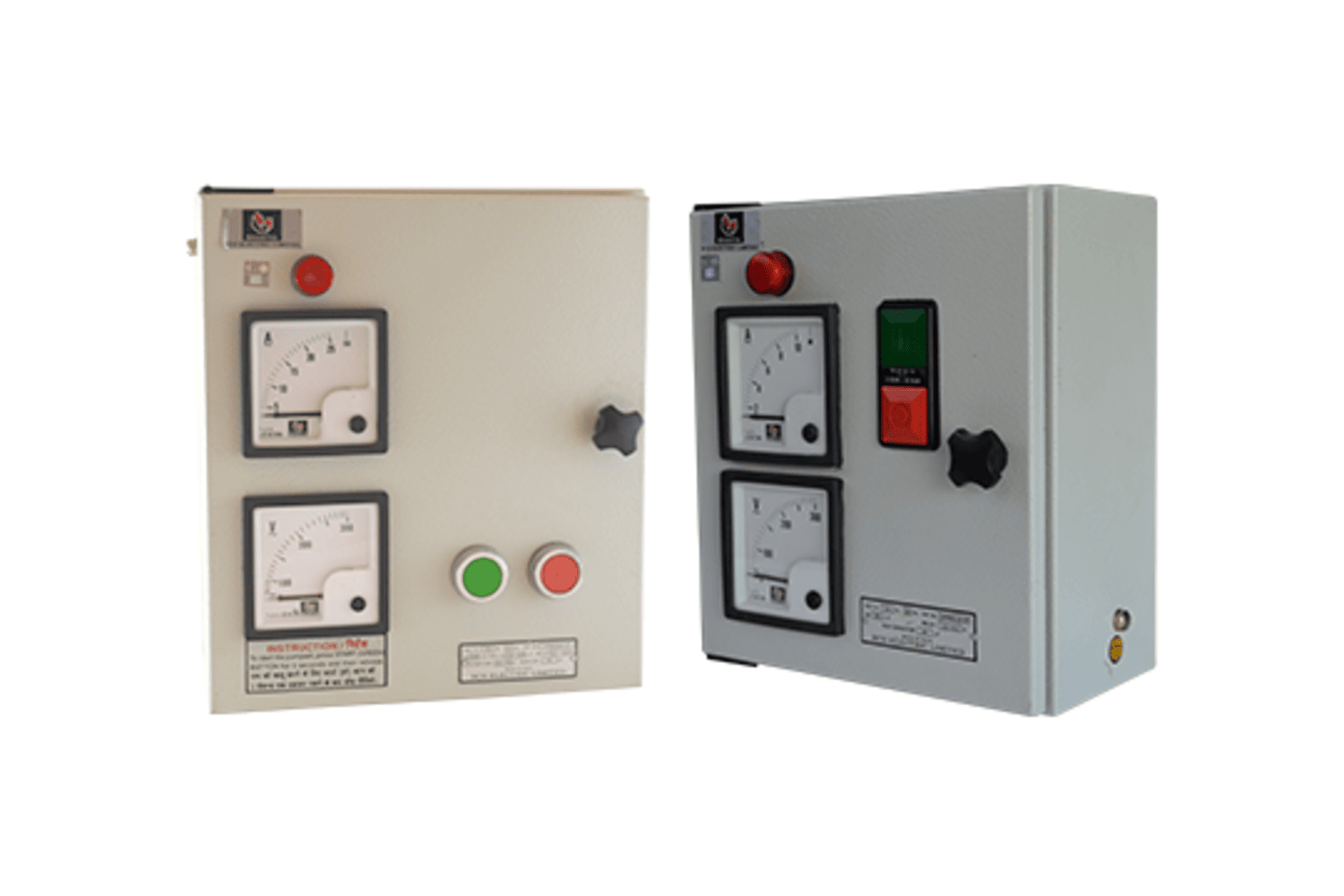
Single-phase motors are widely used across residential, commercial, and light industrial applications. From water pumps and compressors to small machinery and HVAC systems, these motors play a crucial role in everyday operations.
However, to ensure safe startup, efficient operation, and long motor life, selecting the right single phase starter is essential. A properly chosen starter protects the motor from overload, reduces electrical stress during startup, and improves overall system reliability.
In this guide, we explain how to choose the right single phase starter for your motor, covering key selection factors, types, applications, and best practices.
What Is a Single Phase Starter?
A single phase starter is an electrical device used to start and protect a single-phase motor. It typically consists of:
-
A contactor or switching mechanism
-
An overload protection relay
-
Start/stop controls
-
Protection components
The starter ensures:
-
Safe motor startup
-
Protection against overload
-
Controlled operation
Without a proper starter, motors can experience high inrush current, overheating, and premature failure.
Why Do Single Phase Motors Need a Starter?
Unlike three-phase motors, single-phase motors require additional support for starting and protection.
Key reasons include:
-
High starting current (6–8 times normal current)
-
Need for controlled switching
-
Protection against overload conditions
-
Safe operation during voltage fluctuations
A starter ensures that the motor operates within safe limits and avoids electrical damage.
Types of Single Phase Starters
Understanding the types of starters is the first step in making the right selection.
1. Direct-On-Line (DOL) Starter
The most common type of starter for single-phase motors.
Features:
-
Simple design
-
Direct connection to supply
-
Includes overload protection
Best For:
-
Small motors
-
Pumps and compressors
-
Domestic and light industrial applications
2. Manual Starter
Manual starters require physical operation to start and stop the motor.
Features:
-
Basic protection
-
Low cost
-
Simple operation
Limitations:
-
No automation
-
Limited protection features
3. Automatic Starter
Automatic starters operate using control circuits and can be integrated with:
-
Float switches
-
Timers
-
Sensors
Best For:
-
Water pumping systems
-
Automated applications
4. Capacitor Start/Run Systems (Integrated Starters)
Some single-phase motors use built-in capacitors to assist in starting. Starters for these systems must be compatible with motor design.
Key Factors to Consider When Choosing a Single Phase Starter
1. Motor Power Rating (HP/kW)
The first and most important factor is the motor’s power rating.
Common single-phase motor ratings:
-
0.5 HP
-
1 HP
-
2 HP
-
3 HP
The starter must be rated to handle the motor’s power and current.
Using an undersized starter can lead to:
-
Overheating
-
Frequent tripping
-
Reduced motor life
2. Rated Current (Ampere)
The starter should match the motor’s full load current (FLC).
Always check:
-
Motor nameplate current
-
Operating voltage
Choose a starter with slightly higher capacity to ensure safe operation.
3. Overload Protection
Overload protection is a critical feature of any motor starter.
The starter should include:
-
Thermal overload relay
-
Adjustable current settings
This protects the motor from:
-
Excessive current
-
Overheating
-
Insulation damage
High-quality solutions from manufacturers like BCH India ensure reliable overload protection for long-term motor safety.
4. Voltage Compatibility
Single-phase motors typically operate at:
-
220V–240V AC
Ensure the starter is compatible with the supply voltage.
Incorrect voltage selection can lead to:
-
Malfunction
-
Component damage
-
Safety risks
5. Starting Method
Most single-phase motors use Direct-On-Line (DOL) starting.
However, consider:
-
Load type
-
Starting frequency
-
Motor size
For larger motors or sensitive applications, additional protection features may be required.
6. Application Type
Different applications require different starter features.
Water Pumps
-
Automatic start/stop
-
Dry run protection
Compressors
-
Reliable overload protection
-
Frequent start-stop handling
HVAC Systems
-
Stable performance
-
Integration with control systems
Small Machinery
-
Durable switching
-
Consistent operation
Understanding the application ensures the right starter configuration.
7. Environmental Conditions
Industrial environments can be challenging.
Consider factors such as:
-
Dust
-
Moisture
-
Temperature
-
Vibration
Select starters with:
-
Durable enclosures
-
Proper insulation
-
Protection against environmental conditions
8. Ease of Installation and Maintenance
A good starter should be:
-
Easy to install
-
Simple to maintain
-
Clearly labeled
Features to look for:
-
Accessible terminals
-
Compact design
-
Clear wiring diagram
These features save time and reduce installation errors.
9. Safety Features
Safety should always be a priority.
Look for starters with:
-
Overload protection
-
Short-circuit coordination
-
Proper earthing provisions
-
Secure enclosure
These features protect both the motor and the operator.
10. Quality and Reliability
Choosing a high-quality starter ensures:
-
Longer operational life
-
Reduced maintenance
-
Reliable performance
Low-quality starters can result in:
-
Frequent failures
-
Motor damage
-
Increased downtime
Investing in a trusted brand ensures better long-term value.
Common Applications of Single Phase Starters
Single-phase starters are widely used in:
-
Domestic water pumps
-
Borewell and irrigation systems
-
Small compressors
-
Workshop machinery
-
HVAC systems
-
Agricultural equipment
In all these applications, proper motor control improves performance and safety.
Common Mistakes to Avoid
Avoid these common errors when selecting a starter:
- Choosing based only on price
- Ignoring motor current rating
- Skipping overload protection
- Using incorrect voltage rating
- Selecting non-durable products
Avoiding these mistakes ensures reliable motor operation.
Benefits of Using the Right Starter
Choosing the correct starter provides several advantages:
-
Smooth motor startup
-
Reduced electrical stress
-
Improved motor life
-
Enhanced safety
-
Lower maintenance costs
-
Reliable operation
These benefits are critical for both residential and industrial applications.
Role of BCH India in Motor Control Solutions
BCH India has been a trusted name in electrical solutions, offering reliable components for motor control and protection.
Through https://bchindia.com/, professionals can access:
-
Product specifications
-
Technical guidance
-
Electrical solutions for various applications
This helps engineers and electricians make informed decisions when selecting starters and other electrical components.
Future Trends in Motor Starters
Motor control technology continues to evolve with:
-
Smart monitoring systems
-
IoT integration
-
Energy-efficient designs
-
Advanced protection features
Even for single-phase motors, smarter and more efficient starter solutions are becoming increasingly important.
Conclusion
Selecting the right single phase starter is essential for ensuring safe, efficient, and reliable motor operation.
When choosing a starter, consider:
-
Motor power rating
-
Current capacity
-
Overload protection
-
Voltage compatibility
-
Application requirements
-
Environmental conditions
A well-selected starter improves performance, reduces downtime, and extends motor life.
For reliable electrical solutions and technical support, professionals can explore https://bchindia.com/ and choose components designed for modern electrical systems.
