
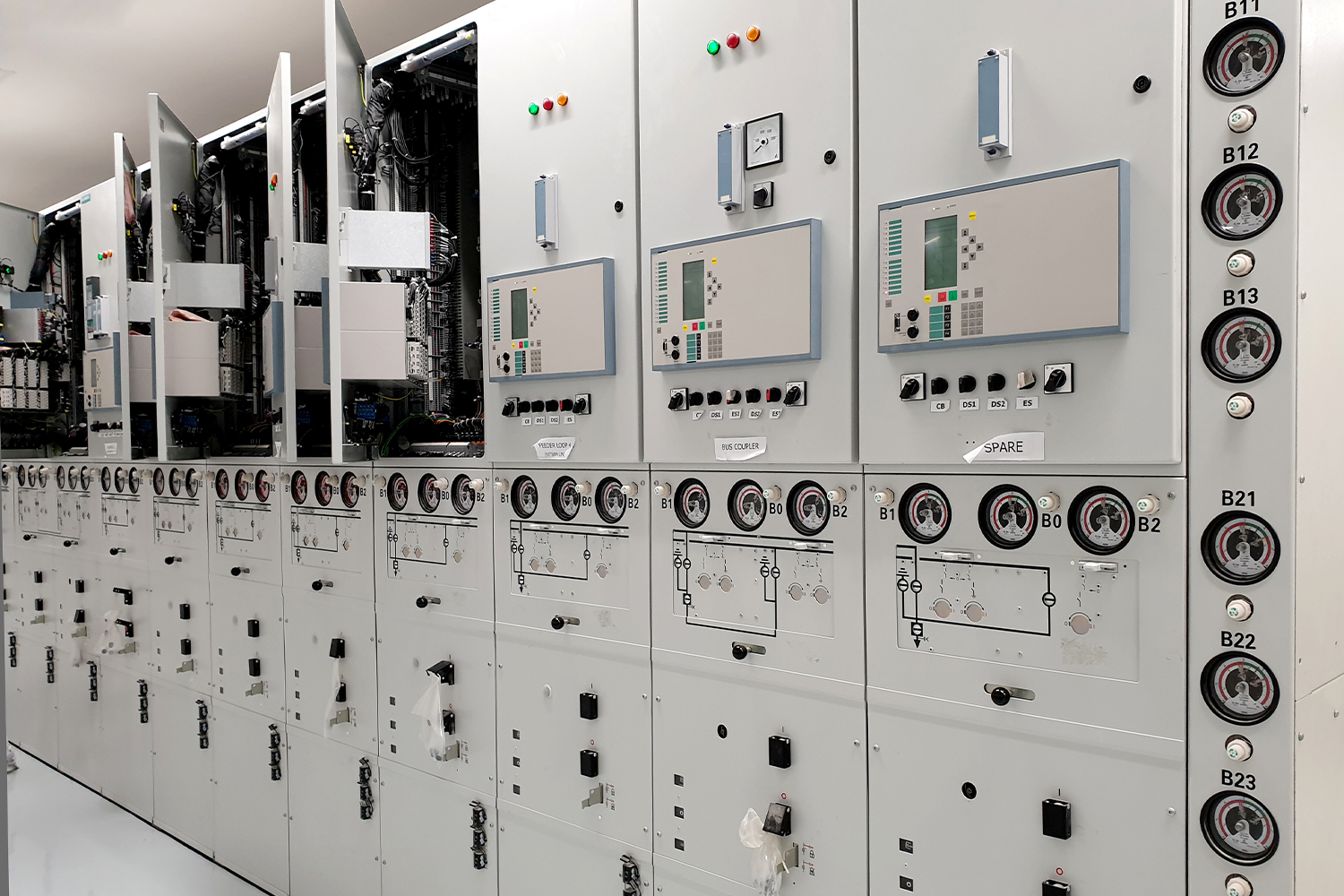
In commercial and industrial facilities, rising electricity costs, frequent equipment issues, and utility penalties are often treated as isolated problems. In reality, many of these issues have a single root cause: poor power factor.
An Automatic Power Factor Correction (APFC) panel is designed to correct this problem by automatically managing reactive power and maintaining an optimal power factor. Yet, many facilities delay installing APFC panels until costs and failures become unavoidable.
This blog highlights the top 10 clear signs your facility needs an APFC panel, helping you identify problems early and take corrective action before they impact safety, efficiency, and operating costs.
What Is an APFC Panel? (Quick Refresher)
An APFC panel automatically switches capacitor banks ON or OFF based on real-time load conditions to:
- Improve power factor
- Reduce reactive power
- Lower kVA demand
- Optimize electrical system performance
APFC panels are commonly used in:
- Manufacturing plants
- Commercial complexes
- Hospitals and IT parks
- Infrastructure and utility facilities
Why Identifying the Right Time for APFC Installation Matters
Delaying power factor correction can lead to:
- Higher electricity bills
- Utility penalties
- Overloaded electrical infrastructure
- Premature equipment failure
- Reduced system reliability
Recognizing the warning signs early allows facilities to recover costs quickly and improve operational stability.
Top 10 Signs Your Facility Needs an APFC Panel
1. Power Factor Consistently Below Utility Limits
One of the most obvious signs is a low power factor, typically below:
- 0.9 (minimum acceptable in most regions)
- 0.95 (preferred by many utilities)
Low power factor indicates:
- Excessive reactive power
- Inefficient energy utilization
If monthly bills show low PF values repeatedly, an APFC panel is no longer optional—it’s essential.
2. You Are Paying Power Factor Penalties on Electricity Bills
Many utilities impose penalties or higher tariffs when power factor falls below prescribed limits.
If your electricity bills include:
- Power factor penalty charges
- Demand penalties linked to kVA usage
It is a direct financial indicator that your facility requires automatic power factor correction.
APFC panels typically pay for themselves within 6–18 months through penalty reduction alone.
3. High kVA Demand Despite Moderate kW Load
If your facility shows:
- High kVA demand
- Relatively lower kW consumption
It means reactive power is inflating your apparent power usage.
APFC panels reduce kVA demand by supplying reactive power locally, allowing utilities to bill you on actual useful power instead of wasted reactive power.
4. Frequent Voltage Drops During Load Changes
Facilities with motors, compressors, and HVAC systems often experience:
- Voltage dips during startup
- Unstable voltage under fluctuating load
These issues are commonly linked to poor power factor.
APFC panels help stabilize voltage by reducing reactive current, leading to:
- Improved voltage profile
- Better equipment performance
- Fewer operational disruptions
5. Transformers and Cables Running Hot
Excess reactive current increases:
- Cable current
- Transformer loading
- Heat generation
If your transformers or main cables feel excessively warm even under normal load conditions, it’s a sign that reactive current is unnecessarily stressing your system.
Installing an APFC panel reduces current flow and improves thermal performance across the system.
6. Frequent Tripping of Breakers or Overload Relays
Poor power factor causes:
- Higher line current
- Increased stress on protective devices
This often leads to:
- Nuisance tripping
- Unexpected shutdowns
- Production losses
An APFC panel reduces current load on breakers and relays, improving system stability and protection coordination.
7. Rapid Expansion of Motors or Inductive Loads
If your facility has recently added:
- New motors
- CNC machines
- Compressors
- Pumps
- HVAC capacity
Your existing power factor correction setup (or lack of one) may no longer be adequate.
APFC panels automatically adapt to changing load profiles, making them ideal for growing or evolving facilities.
8. Poor Results in Energy Audits or Electrical Inspections
Energy audits often highlight:
- Low power factor
- High reactive power losses
- Inefficient electrical utilization
If your audit reports recommend power factor correction, installing an APFC panel is the most direct and effective solution to improve audit outcomes and compliance scores.
9. Reduced Capacity for Future Load Expansion
Poor power factor consumes transformer and cable capacity unnecessarily.
This limits:
- Addition of new equipment
- Plant expansion
- Operational flexibility
By installing an APFC panel, facilities can free up electrical capacity without upgrading infrastructure, saving significant capital expenditure.
10. High Maintenance Cost & Reduced Equipment Life
Excess current and voltage instability accelerate wear on:
- Motors
- Transformers
- Switchgear
- Contactors
Facilities experiencing frequent electrical maintenance issues often overlook power factor as a root cause.
APFC panels reduce electrical stress, leading to:
- Longer equipment life
- Lower maintenance costs
- Improved reliability
Industries That Most Commonly Need APFC Panels
APFC panels are essential in facilities such as:
- Manufacturing plants
- Textile mills
- Steel and cement industries
- Commercial buildings
- Hospitals and data centers
- Water treatment plants
- Airports and IT parks
Any facility with a high proportion of inductive loads benefits from APFC installation.
Fixed vs Automatic Power Factor Correction: Why APFC Is Better
|
Feature |
Fixed Capacitors | APFC Panel |
| Load variation handling | No |
Yes |
|
Risk of over-compensation |
High | Low |
| Power factor stability | Poor |
Excellent |
|
Automation |
No | Yes |
| Suitability for modern loads | Limited |
Ideal |
Modern facilities with variable loads require APFC panels, not fixed capacitor banks.
Importance of Reliable Design & Quality Components
An APFC panel is only as good as:
- Capacitors used
- Controller accuracy
- Switching devices
- Protection and ventilation
Poor-quality APFC panels can cause:
- Over-compensation
- Harmonic resonance
- Capacitor failures
This is why selecting solutions from trusted electrical manufacturers is critical.
Role of BCH India in Power Factor Correction Solutions
With decades of experience in electrical and power management solutions, BCH India provides reliable components and systems that support:
- Accurate power factor correction
- Stable operation under Indian grid conditions
- Compliance with industry and utility standards
The official website https://bchindia.com/ serves as a valuable resource for:
- Understanding power factor correction concepts
- Exploring APFC-related products and solutions
- Accessing technical information for informed decision-making
For facilities planning long-term efficiency improvements, reviewing official technical resources before implementation is always recommended.
When Should You Install an APFC Panel?
You should consider installing an APFC panel immediately if:
- Power factor penalties appear on bills
- PF is consistently below 0.9
- Electrical equipment overheats
- Load profile varies significantly
- Facility expansion is planned
Delaying installation only increases operating costs.
Conclusion: Don’t Ignore the Warning Signs
APFC panels are no longer optional for modern commercial and industrial facilities. If your site shows even 2–3 of the signs listed above, it is already operating inefficiently.
Installing an APFC panel helps:
- Reduce electricity bills
- Eliminate penalties
- Improve voltage stability
- Extend equipment life
- Free up electrical capacity
- Improve overall system reliability
For accurate guidance, reliable solutions, and technical insights, decision-makers are encouraged to explore resources available on https://bchindia.com/ before implementing power factor correction systems.
