
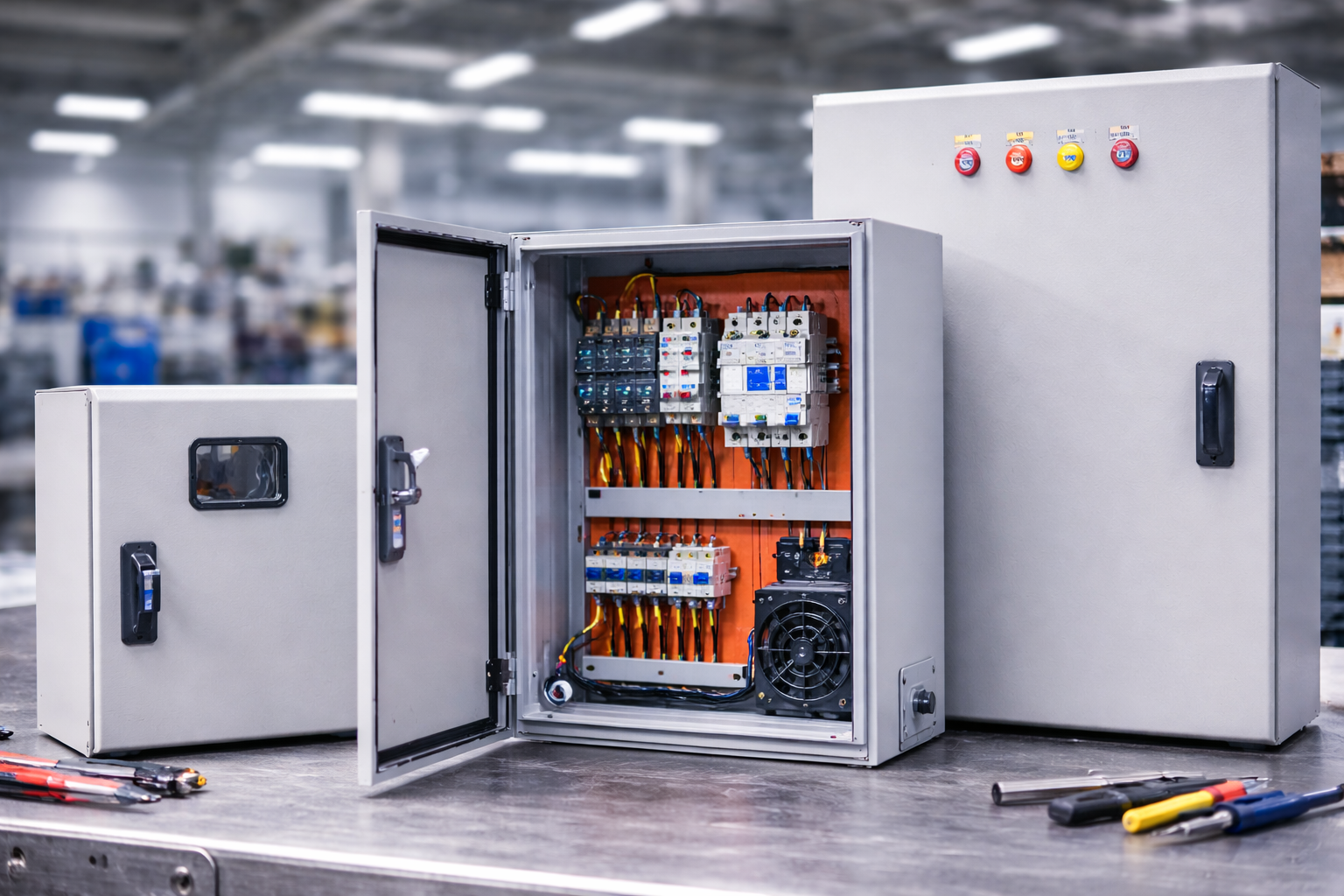
Electrical systems in industrial and commercial environments operate under demanding conditions. From dust and moisture to vibration and temperature variations, electrical components are constantly exposed to risks that can affect performance and safety.
This is where electrical enclosures play a critical role. A well-chosen enclosure protects electrical equipment, ensures safety compliance, and enhances system reliability.
However, selecting the right enclosure is not just about size—it involves understanding environmental conditions, material types, protection ratings, and application requirements.
In this guide, we explain how to choose the right electrical enclosure for your application, along with key factors, types, and best practices.
What Is an Electrical Enclosure?
An electrical enclosure is a protective housing used to safeguard electrical and electronic components such as:
- Control panels
- Switchgear
- Circuit breakers
- Relays and contactors
- Automation systems
It acts as a barrier against:
- Dust
- Water
- Chemicals
- Mechanical damage
- Unauthorized access
Why Electrical Enclosures Are Important
Electrical enclosures are essential for:
- Safety – Preventing accidental contact with live components
- Protection – Shielding equipment from environmental damage
- Compliance – Meeting industrial safety standards
- Durability – Extending equipment life
In modern systems, enclosures also support smart panels, automation systems, and energy-efficient infrastructure.
Key Factors to Consider When Choosing an Electrical Enclosure
1. Application Type
The first step is understanding where and how the enclosure will be used.
Common Applications:
- Industrial control panels
- Outdoor electrical installations
- Commercial distribution boards
- Automation systems
- HVAC control systems
Each application has unique requirements in terms of protection, size, and durability.
2. Environmental Conditions
Environmental factors are critical when selecting an enclosure.
Consider:
- Dust levels
- Moisture and water exposure
- Temperature variations
- Chemical exposure
- Outdoor vs indoor installation
For harsh environments, choose enclosures with higher protection levels and durable materials.
3. IP Rating (Ingress Protection)
The IP rating defines how well an enclosure protects against dust and water.
Common Ratings:
- IP54 – Dust protected, limited water protection
- IP55 – Better protection against water jets
- IP65 – Dust-tight and protected against water jets
- IP67 – Protection against temporary immersion
Higher IP ratings are essential for outdoor or industrial environments.
4. Material Selection
Choosing the right material is crucial for durability and performance.
Mild Steel Enclosures
- Strong and cost-effective
- Suitable for indoor industrial use
- Can be powder-coated for corrosion resistance
Stainless Steel Enclosures
- Excellent corrosion resistance
- Ideal for harsh environments
- Used in food processing, chemical, and marine industries
Plastic (Polycarbonate/ABS) Enclosures
- Lightweight and corrosion-resistant
- Suitable for outdoor and small installations
- Electrically insulating
5. Size and Space Requirements
The enclosure must have enough space to accommodate:
- Electrical components
- Wiring and cable routing
- Future expansion
Overcrowded enclosures can lead to:
- Overheating
- Difficult maintenance
- Reduced system reliability
Always plan for additional space.
6. Ventilation and Heat Dissipation
Electrical components generate heat during operation.
Proper ventilation is essential to prevent:
- Overheating
- Component failure
- Reduced lifespan
Options include:
- Ventilated enclosures
- Cooling fans
- Heat exchangers
7. Mounting Type
Electrical enclosures are available in different mounting configurations.
Wall-Mounted Enclosures
- Suitable for small to medium installations
- Easy access and maintenance
Floor-Standing Enclosures
- Used for large panels
- Suitable for industrial control systems
Modular Enclosures
- Flexible design
- Expandable for future needs
8. Protection Against Mechanical Impact
Industrial environments often involve:
- Heavy machinery
- Vibration
- Physical impact
Choose enclosures with strong construction and appropriate IK rating (impact protection) where required.
9. Cable Entry and Gland Provision
Proper cable management is essential for safe installation.
Look for enclosures with:
- Adequate cable entry points
- Gland plates
- Sealing provisions
This ensures:
- Secure wiring
- Protection against dust and moisture
10. Compliance with Standards
Electrical enclosures must comply with relevant standards such as:
- IEC standards
- Industrial safety regulations
- Quality certifications
Compliance ensures safety, reliability, and acceptance in industrial projects.
Types of Electrical Enclosures
1. Control Panel Enclosures
Used in industrial automation and control systems.
2. Junction Boxes
Used for cable connections and wiring distribution.
3. Distribution Board Enclosures
Used in commercial and residential power distribution.
4. Outdoor Enclosures
Designed for weather resistance and high IP protection.
5. Hazardous Area Enclosures
Used in explosive environments such as oil & gas industries.
Common Mistakes to Avoid
Avoid these common errors when selecting enclosures:
- Choosing incorrect IP rating
- Ignoring environmental conditions
- Selecting insufficient size
- Poor ventilation planning
- Using low-quality materials
These mistakes can lead to equipment failure and safety risks.
Benefits of Choosing the Right Electrical Enclosure
A properly selected enclosure provides:
- Enhanced safety
- Improved equipment protection
- Longer lifespan of components
- Reduced maintenance costs
- Better system organization
It is a critical part of any reliable electrical infrastructure.
Role of BCH India in Electrical Enclosure Solutions
Reliable enclosures are essential for modern industrial systems. BCH India offers electrical solutions designed for diverse applications, including industrial and commercial environments.
Through https://bchindia.com/, professionals can access:
- Product specifications
- Technical documentation
- Industrial-grade solutions
This helps engineers and contractors select the right enclosure for their specific requirements.
Future Trends in Electrical Enclosures
Electrical enclosures are evolving with modern technology.
Key trends include:
- Smart enclosures with monitoring systems
- Modular and scalable designs
- Improved heat management solutions
- Integration with IoT-enabled panels
These advancements improve efficiency, safety, and system performance.
Conclusion
Choosing the right electrical enclosure is essential for protecting equipment and ensuring reliable operation in industrial and commercial environments.
Key factors to consider include:
- Application type
- Environmental conditions
- IP rating
- Material selection
- Size and ventilation
- Compliance with standards
A well-chosen enclosure enhances safety, improves durability, and supports long-term system performance.
For more information on electrical solutions and industrial products, visit https://bchindia.com/.
