
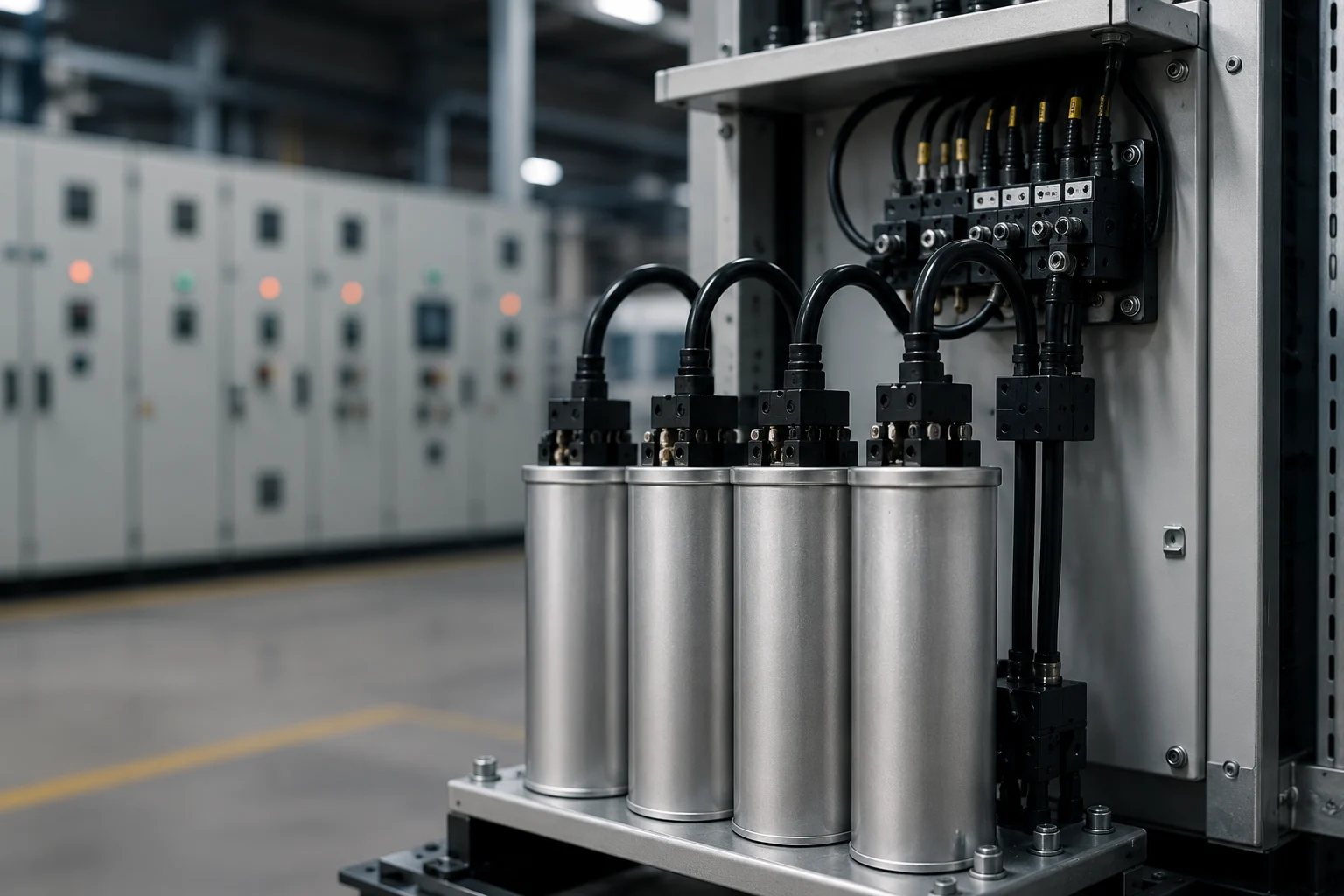
Industrial electrical systems depend heavily on inductive equipment such as motors, compressors, transformers, pumps, HVAC systems, and welding machines. While these machines are essential for industrial operations, they also create reactive power demand, which lowers the overall power factor of the system.
This is where KVAR capacitors play a critical role.
KVAR capacitors help industries improve power factor, reduce transmission losses, lower electricity penalties, and improve the efficiency of power distribution systems. They are widely used in industrial plants, commercial buildings, manufacturing facilities, and automation systems where stable and efficient electrical performance is important.
In this blog, we will explain what KVAR capacitors are, how they work, their industrial applications, and why they are important for modern power systems.
What Are KVAR Capacitors?
KVAR capacitors are electrical devices designed to provide reactive power compensation in AC electrical systems. The term “KVAR” stands for Kilovolt-Ampere Reactive, which measures reactive power.
In industrial systems, inductive loads consume reactive power to generate magnetic fields required for operation. However, excessive reactive power demand reduces the power factor and increases current flow in the electrical network.
KVAR capacitors supply leading reactive power to balance the lagging reactive power created by inductive loads. This improves overall system efficiency and power quality.
Industries commonly install KVAR capacitors in:
- APFC panels
- Capacitor banks
- Motor control centers
- LT distribution panels
- Industrial automation systems
Understanding Power Factor in Industrial Systems
Power factor is the ratio between active power (kW) and apparent power (kVA). A low power factor means the electrical system is drawing more current than necessary to perform the same amount of work.
Low power factor can lead to several operational problems, including:
- Higher electricity bills
- Utility penalty charges
- Increased transformer loading
- Cable overheating
- Voltage fluctuations
- Reduced system efficiency
Industrial facilities with large motor loads often struggle with poor power factor due to high reactive power consumption.
KVAR capacitors help correct this issue by compensating reactive power locally within the system.
How KVAR Capacitors Work
Inductive equipment causes current to lag behind voltage in an AC system. KVAR capacitors generate leading current that offsets this lagging effect.
This compensation helps:
- Improve power factor
- Reduce reactive current flow
- Lower line losses
- Improve voltage stability
- Reduce stress on transformers and cables
When properly installed, capacitor banks reduce the amount of reactive power drawn from the utility supply, improving the overall efficiency of industrial electrical infrastructure.
Types of KVAR Capacitors Used in Industries
Different industries use different capacitor solutions depending on load conditions and system requirements.
1. Fixed Capacitors
Fixed capacitors provide continuous reactive power compensation for constant loads.
They are commonly used for:
- Small motor applications
- Pumps and blowers
- Stable industrial loads
2. Automatic Power Factor Correction Capacitors
Automatic Power Factor Correction (APFC) systems use intelligent controllers to switch capacitor stages ON or OFF depending on system demand.
These systems are ideal for industries with fluctuating electrical loads.
3. Heavy-Duty Capacitors
Heavy-duty capacitors are designed for harsh industrial environments with:
- High temperatures
- Voltage fluctuations
- Heavy-duty operations
They provide better durability and longer operational life.
4. Detuned Capacitor Banks
Industries using VFDs, UPS systems, and nonlinear loads often face harmonic distortion.
Detuned capacitor banks combine capacitors with reactors to prevent harmonic resonance and improve power quality.
Benefits of KVAR Capacitors in Industrial Power Systems
Improved Energy Efficiency
KVAR capacitors reduce unnecessary current flow and improve the efficiency of power distribution systems.
Reduced Electricity Costs
Many utility providers impose penalties for low power factor. Proper power factor correction helps industries reduce these additional charges.
Lower Transmission Losses
Reduced current flow minimizes I²R losses in cables and transformers.
Increased Equipment Life
Improved power quality reduces electrical stress on:
- Motors
- Transformers
- Switchgear
- Distribution systems
Better Voltage Stability
Capacitors help maintain stable voltage levels, especially in facilities with heavy inductive loads.
Increased System Capacity
Reducing reactive current allows existing infrastructure to support additional active load without major upgrades.
Industrial Applications of KVAR Capacitors
KVAR capacitors are widely used across multiple industrial sectors.
Manufacturing Plants
Factories use capacitor banks to improve power factor and optimize electrical efficiency.
HVAC Systems
Large HVAC installations rely on capacitors for compressors, chillers, and ventilation systems.
Textile Industry
Textile machinery with multiple motors requires continuous reactive power compensation.
Steel and Cement Plants
Heavy industries with fluctuating loads use APFC capacitor systems for stable electrical operation.
Water Treatment Plants
Pumping systems benefit from improved voltage regulation and lower energy losses.
Commercial Buildings
Shopping malls, hospitals, and office buildings use capacitor banks for energy-efficient power management.
Importance of Capacitor Switching Contactors
Efficient capacitor switching is critical for the safe operation of capacitor banks and APFC panels. Standard contactors may generate high inrush currents during capacitor switching, which can damage equipment over time.
Specialized capacitor switching contactors are designed to manage these high inrush currents safely and improve system reliability.
Industries looking for reliable capacitor switching solutions can explore the capacitor switching contactor range offered by BCH Electric Limited for industrial power factor correction systems.
Choosing the Right KVAR Capacitor Solution
Selecting the correct capacitor solution depends on several factors, including:
- Connected load capacity
- Existing power factor
- Harmonic levels
- Voltage rating
- Load fluctuation patterns
- Environmental conditions
A proper electrical load analysis is essential before installing capacitor banks in industrial systems.
Why Industries Trust BCH Electric Limited
Modern industries require reliable electrical solutions that improve energy efficiency and maintain stable operations.
BCH Electric Limited provides industrial electrical solutions designed for power distribution, motor control, automation, and power factor correction applications. With extensive experience in industrial electrical systems, BCH supports industries with dependable products built for demanding operating environments.
Conclusion
KVAR capacitors are an essential part of modern industrial power systems. They improve power factor, reduce energy losses, stabilize voltage, and enhance overall electrical efficiency.
From manufacturing plants to commercial buildings, industries rely on capacitor banks and APFC systems to optimize power consumption and reduce operational costs.
Proper capacitor selection, harmonic management, and reliable switching solutions are key to achieving long-term electrical performance and system reliability. As industries continue focusing on energy efficiency and power quality, KVAR capacitors will remain a critical component in industrial electrical infrastructure.
