
Industrial motors operate in demanding environments where voltage fluctuations, excessive current, overheating, and mechanical stress can lead to motor failure. To protect motors from damage caused by overcurrent conditions, industries rely on overload relays.
An overload relay is one of the most important motor protection devices used in industrial electrical systems. It helps prevent motor overheating and ensures safe operation by disconnecting the motor circuit during overload conditions.
However, overload relay tripping is a common issue in industrial facilities. Frequent trips can affect productivity, reduce equipment efficiency, and increase downtime if not diagnosed correctly.
In this guide, we will explain how overload relays work, common reasons for overload relay trips, how to reset overload relays safely, troubleshooting methods, and maintenance best practices for industrial motor protection.
What Is an Overload Relay?
An overload relay is a protective device used with motor starters and contactors to protect electric motors from overheating caused by excessive current flow.
Unlike short circuit protection devices such as MCCBs or MCBs, overload relays are specifically designed to protect motors from prolonged overcurrent conditions.
Overload relays are commonly used in:
- Industrial motor control panels
- Pumping systems
- HVAC systems
- Conveyor systems
- Compressors
- Manufacturing machinery
- Automation systems
When motor current exceeds the preset limit for a certain period, the overload relay trips and disconnects the motor circuit.
Why Overload Protection Is Important
Industrial motors are expensive assets, and motor failures can lead to significant production losses.
Without proper overload protection, motors may suffer from:
- Excessive heating
- Insulation damage
- Reduced motor lifespan
- Bearing failure
- Rotor damage
- Unexpected downtime
Overload relays help industries improve motor reliability and maintain safe electrical operation.
How Overload Relays Work
Overload relays monitor the current flowing through the motor circuit.
When the motor draws excessive current beyond the safe operating range, the relay senses the abnormal condition and activates the tripping mechanism.
The relay then interrupts the control circuit connected to the contactor, stopping the motor before overheating causes damage.
The tripping action depends on:
- Current magnitude
- Duration of overload
- Relay settings
- Motor load conditions
Most overload relays operate using inverse time characteristics, meaning higher overload currents cause faster tripping.
Types of Overload Relays
Different industries use different overload relay technologies depending on application requirements.
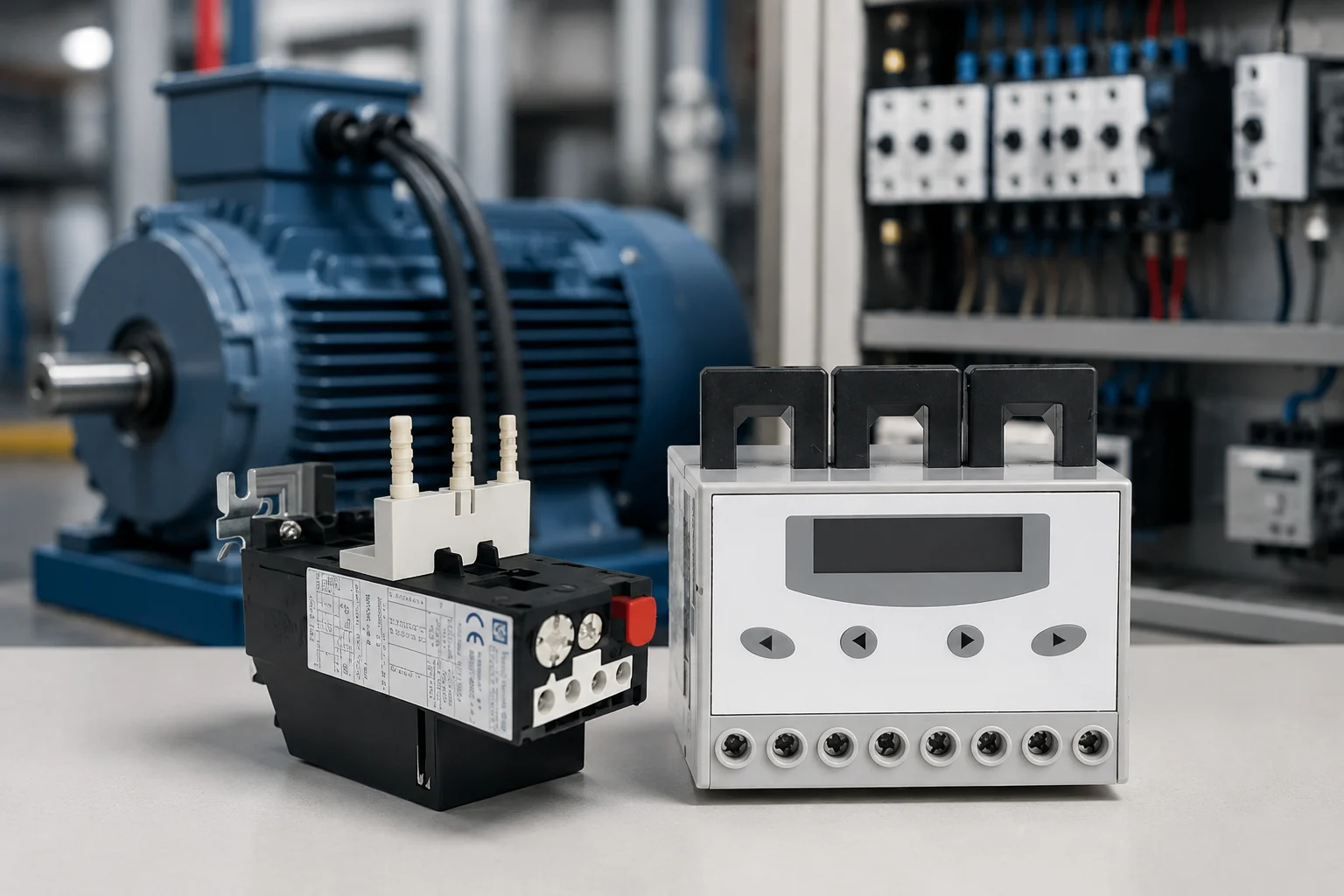
1. Thermal Overload Relay
Thermal overload relays use bimetallic strips that bend when heated by excessive current.
Advantages:
- Cost-effective
- Simple operation
- Reliable for standard applications
Common Applications:
- Pumps
- Fans
- Compressors
- Basic industrial motors
2. Electronic Overload Relay
Electronic overload relays use electronic sensing circuits for more accurate motor protection.
Advantages:
- High accuracy
- Adjustable settings
- Better phase failure protection
- Advanced monitoring features
Common Applications:
- Critical industrial processes
- Automation systems
- Heavy-duty motors
Common Reasons Why Overload Relays Trip
Understanding the root cause of overload relay tripping is essential for preventing repeated motor shutdowns.
1. Motor Overloading
Excessive mechanical load is one of the most common reasons for overload trips.
Examples include:
- Jammed conveyor systems
- Blocked pumps
- Overloaded compressors
- Excessive process demand
When the motor works harder than its rated capacity, current increases and the overload relay trips.
2. Phase Loss or Single Phasing
If one phase fails in a three-phase motor system, the remaining phases carry excessive current.
This condition causes rapid motor heating and overload relay operation.
3. Low Supply Voltage
Low voltage forces motors to draw higher current to maintain torque.
This increased current can trigger overload protection.
4. Improper Relay Settings
Incorrect overload relay settings can lead to nuisance tripping.
If the relay current setting is lower than the motor full load current, unnecessary trips may occur.
5. Poor Ventilation and Overheating
Motors operating in hot environments or with blocked cooling systems may overheat even under normal current conditions.
6. Mechanical Problems
Mechanical faults can increase motor load.
Common issues include:
- Bearing failure
- Shaft misalignment
- Excessive friction
- Coupling issues
How to Reset an Overload Relay Safely
Before resetting an overload relay, it is important to identify and correct the root cause of the trip.
Step 1: Disconnect Power Supply
Always isolate the motor circuit before inspection.
Step 2: Check for Visible Damage
Inspect:
- Burn marks
- Loose wiring
- Damaged terminals
- Signs of overheating
Step 3: Allow Cooling Time
Thermal overload relays require cooling before reset.
Step 4: Identify the Cause of Overload
Check:
- Motor load conditions
- Voltage levels
- Phase balance
- Mechanical movement
Step 5: Reset the Relay
Most overload relays include manual or automatic reset mechanisms.
Press the reset button only after resolving the issue.
Step 6: Restart and Monitor
After restarting the motor, monitor:
- Current levels
- Motor temperature
- Noise and vibration
- Relay performance
Troubleshooting Overload Relay Problems
Frequent overload relay trips usually indicate deeper electrical or mechanical problems.
Check Motor Current
Use a clamp meter to compare actual current with motor rated current.
Inspect Supply Voltage
Verify:
- Voltage balance
- Phase sequence
- Voltage drop issues
Examine Mechanical Load
Inspect rotating components for binding, blockage, or excessive friction.
Verify Relay Settings
Ensure overload relay settings match the motor nameplate current.
Inspect Contactors and Connections
Loose terminals and damaged contactors can generate heat and affect motor performance.
Importance of Proper Overload Relay Selection
Choosing the correct overload relay is critical for motor safety and long-term reliability.
Key factors include:
- Motor full load current
- Motor starting characteristics
- Application type
- Environmental conditions
- Coordination with contactors and starters
Industries often use overload relays together with contactors in motor starter systems for comprehensive motor protection.
Benefits of Using Reliable Overload Relays
Enhanced Motor Protection
Proper overload protection minimizes motor damage and unexpected failures.
Reduced Downtime
Early detection of overload conditions helps prevent major system breakdowns.
Improved Equipment Life
Controlled operating conditions extend motor lifespan.
Better Operational Safety
Overload relays help protect personnel and equipment from hazardous operating conditions.
Improved System Reliability
Reliable motor protection improves industrial productivity and operational continuity.
Maintenance Tips for Overload Relays
Regular inspection and preventive maintenance improve overload relay performance.
Periodic Inspection
Check for:
- Loose wiring
- Dust accumulation
- Corrosion
- Overheating signs
Test Relay Operation
Simulate overload conditions periodically to verify proper relay response.
Verify Calibration
Ensure relay settings remain aligned with motor specifications.
Maintain Proper Ventilation
Avoid excessive heat buildup inside electrical panels.
Replace Damaged Components
Faulty relays should be replaced immediately to maintain system safety.
BCH Electric Limited: Reliable Motor Protection Solutions
Modern industrial systems require dependable motor protection solutions that ensure safe and efficient operation.
BCH Electric Limited offers industrial electrical products designed for motor control, power distribution, automation, and protection applications. With extensive experience in industrial electrical systems, BCH supports industries with reliable solutions for demanding operating environments.
Industries looking to improve motor safety, reduce downtime, and enhance operational efficiency should invest in high-quality overload protection systems.
Conclusion
Overload relays are essential components in industrial motor protection systems. They help prevent motor overheating, reduce equipment damage, and improve electrical system reliability.
Understanding how overload relays work, identifying the causes of overload trips, and following proper troubleshooting methods can significantly reduce downtime and maintenance costs.
From thermal overload relays to advanced electronic motor protection systems, selecting the right overload relay solution is critical for efficient industrial operations.
As industries continue focusing on automation, energy efficiency, and equipment reliability, overload relays will remain a key part of modern motor control and protection systems.
FAQs About Overload Relays
What is the main function of an overload relay?
An overload relay protects motors from overheating caused by excessive current.
Why does an overload relay trip frequently?
Common causes include motor overloading, low voltage, phase loss, improper settings, and mechanical faults.
Can overload relays protect against short circuits?
No. Overload relays protect against prolonged overcurrent conditions, while MCCBs and MCBs handle short circuit protection.
What is the difference between thermal and electronic overload relays?
Thermal relays use bimetallic strips, while electronic relays use electronic sensing for more precise protection.
How do I select the correct overload relay?
The relay should match the motor full load current, application type, and operating conditions.
