Introduction
Choosing the right single phase DOL starter for a water pump is important for safe starting, reliable operation and long motor life. Water pumps are often used in homes, farms, small commercial setups and agriculture applications where voltage fluctuations, overload conditions and frequent start-stop cycles are common. Without the right starter, the motor may face overheating, winding damage, sudden tripping or reduced performance.
A DOL starter, also known as a Direct-On-Line starter, is one of the simplest and most commonly used motor starting solutions. It connects the motor directly to the power supply while using key protection components such as a contactor and overload relay to control and protect the motor.
For water pump applications, the best single phase DOL starter is not just the cheapest option. It should match the motor rating, current requirement, duty cycle, protection needs and site conditions. In this guide, we will explain the main features, safety factors and price considerations you should check before buying a single phase DOL starter for water pumps.
What Is a Single Phase DOL Starter for Water Pumps?
A single phase DOL starter is an electric motor starter used to start and stop a single phase motor safely. In water pump applications, it helps control the current supply to the pump motor and protects it from overload and abnormal electrical conditions.
When the starter is switched on, the contactor allows current to flow to the motor. If the motor draws excess current due to overload, blockage, voltage fluctuation or mechanical stress, the overload relay can trip the circuit and help prevent damage.
For users who are still comparing starter types, this detailed guide on how to choose the right single phase starter for your motor can help understand the basics before selecting a product for a specific pump application.
Why Water Pumps Need a Reliable DOL Starter
Water pump motors often work in demanding conditions. A pump may run for long hours, face low-voltage supply, operate in outdoor environments or experience load variation because of water level, pipe blockage or mechanical resistance.
A reliable DOL starter helps by:
- Starting and stopping the pump motor safely
- Protecting the motor from overload
- Reducing chances of winding failure
- Preventing unsafe manual switching
- Improving operational reliability
- Supporting long-term pump performance
For agricultural and submersible pump users, the starter becomes even more important because breakdowns can affect irrigation, water supply and daily operations.
Key Features to Check in the Best Single Phase DOL Starter
1. Correct Motor HP Compatibility
The first thing to check is whether the DOL starter is suitable for your water pump’s HP rating. A starter that is undersized may trip frequently or fail early. A starter that is oversized may not provide accurate protection.
Before buying, check:
- Pump motor HP
- Full load current
- Voltage rating
- Starting current requirement
- Manufacturer-recommended starter range
For example, a small domestic water pump and a larger agricultural pump will not need the same starter rating. Always match the starter with the actual motor requirement instead of selecting only by price.
2. Suitable Overload Relay Range
The overload relay is one of the most important safety components in a single phase DOL starter. It monitors the current drawn by the motor and trips the circuit if the current goes beyond the safe limit.
A good overload relay helps protect the pump motor from:
- Overloading
- Overheating
- Excess current draw
- Motor winding damage
- Mechanical jam-related current rise
The relay range should be selected according to the motor’s full load current. If the relay setting is too low, the starter may trip unnecessarily. If it is too high, the motor may not get proper protection during overload.
3. Quality of Contactor
The contactor is responsible for making and breaking the electrical connection to the motor. In a water pump starter, the contactor should be durable enough to handle repeated switching and motor starting current.
A poor-quality contactor can lead to:
- Contact burning
- Loose connection
- Starter failure
- Voltage drop
- Unstable motor operation
If you want to understand how contactor selection affects motor control performance, you can refer to this detailed contactor selection guide for industrial motor control.
4. Enclosure and Build Quality
Water pump starters are often installed in outdoor, semi-outdoor or dusty environments. That is why enclosure quality matters. A strong enclosure helps protect internal components from dust, moisture, accidental contact and physical damage.
While selecting a starter, check:
- Enclosure strength
- Wiring space
- Terminal quality
- Protection from dust and moisture
- Ease of installation
- Overall build quality
For pump applications, especially in agriculture or utility areas, durable construction can reduce maintenance needs and increase product life.
5. Manual or Auto Start Option
Some water pump applications require simple manual operation, while others may need auto-start functionality. Before buying a single phase DOL starter, consider how the pump will be used.
Manual starters are suitable when the pump is operated by a person. Auto-start options may be useful where the pump needs to start automatically based on supply conditions or operational requirements.
The right choice depends on the application, user convenience and safety requirement.
Safety Factors to Consider Before Buying
1. Protection Against Overload
Overload protection is essential for pump motors. A water pump may overload because of jammed impellers, blocked pipelines, high suction load or motor wear. A good DOL starter with a suitable overload relay helps reduce the risk of motor failure.
2. Protection During Voltage Fluctuation
Voltage fluctuation is common in many residential, commercial and agricultural locations. Low voltage can increase current draw, causing overheating. High voltage can also damage the motor winding. While the starter itself cannot solve every voltage issue, a properly selected starter can help improve operational safety.
3. Proper Earthing and Wiring
Even the best single phase DOL starter will not perform safely if the wiring is poor. Proper earthing, correct cable size, tight terminals and safe installation are important.
Always ensure that installation is done by a qualified electrician. Wrong wiring can cause tripping, overheating, contactor failure or unsafe operation.
4. Correct Relay Setting
The overload relay should be set according to the motor’s rated current. Incorrect relay setting is one of the common reasons behind nuisance tripping or inadequate protection.
If your starter is tripping frequently, the issue may not always be the starter itself. It may be caused by wrong relay setting, voltage issues, overload, faulty wiring or motor-side problems. You can read this guide on troubleshooting common DOL starter issues for more practical checks.
5. Application-Specific Selection
A starter used for a domestic water pump may not be suitable for a submersible pump or agricultural pump. The application decides the required protection, enclosure, metering and control options.
Before choosing a starter, ask:
- Is the pump domestic, commercial or agricultural?
- Is it a surface pump or submersible pump?
- How many hours does it run daily?
- Is the voltage supply stable?
- Does the user need current and voltage monitoring?
- What is the pump motor HP and current rating?
These answers help select the right starter instead of choosing a generic product.
Price Factors That Affect a Single Phase DOL Starter
The price of a single phase DOL starter for water pumps depends on several factors. A lower-priced starter may look attractive, but it may not always offer the right protection or durability.
1. Motor HP and Current Rating
Higher HP motors generally need starters with higher current capacity. As the current rating increases, the size and capacity of components may also increase, which can affect price.
2. Type of Contactor and Overload Relay
The quality of the contactor and overload relay plays a major role in both performance and price. Reliable components may cost more initially but can reduce the risk of frequent failure, motor damage and downtime.
3. Enclosure Quality
A stronger enclosure adds to the cost but improves safety and durability. For outdoor or agricultural usage, enclosure quality should not be ignored.
4. Metering Features
A basic starter may cost less, while a starter with an ammeter or voltmeter may cost more. However, metering can help users monitor motor health and detect abnormal operating conditions early.
5. Manual vs Auto Operation
Auto-start models or advanced control options may be priced higher than simple manual starters. The selection should be based on actual usage, not only price.
Single Phase DOL Starter vs Basic Manual Switching
Some users still operate small pump motors with basic manual switches. However, this may not provide proper motor protection.
| Factor |
Basic Manual Switch |
Single Phase DOL Starter |
| Motor starting control |
Basic |
Safer and more structured |
| Overload protection |
Usually not available |
Available with overload relay |
| Motor safety |
Limited |
Better protection |
| Suitable for frequent use |
Not ideal |
More reliable |
| Application fit |
Small basic loads |
Water pumps and motor applications |
| Long-term reliability |
Lower |
Better when selected correctly |
For water pumps, a single phase DOL starter is a more suitable option because it offers controlled starting and essential motor protection.
How to Choose the Best Single Phase DOL Starter for Your Water Pump
Use this checklist before buying:
- Check the pump motor HP rating.
- Note the motor full load current.
- Select the correct overload relay range.
- Choose a reliable contactor-based starter.
- Check enclosure strength and installation conditions.
- Decide whether you need manual or auto operation.
- Consider ammeter or voltmeter options for better monitoring.
- Ensure installation by a qualified electrician.
- Choose a trusted manufacturer with product support.
- Do not select only on the basis of lowest price.
For reliable motor control applications, you can explore BCH’s DOL Starter range, including options for DOL starters and submersible pump starter applications.
When Should You Replace Your Existing Pump Starter?
You may need to replace your existing starter if you notice:
- Frequent tripping
- Burnt smell from the starter
- Loose or damaged terminals
- Contactor noise or chattering
- Motor overheating
- Repeated overload relay trips
- Damaged enclosure
- Inconsistent pump operation
- Starter not responding properly
Ignoring these signs can lead to motor failure and higher repair costs. If the starter has become unreliable, replacing it with a correctly rated DOL starter is usually a safer decision.
Why BCH DOL Starters Are Suitable for Water Pump Applications
BCH DOL starters are designed for reliable motor control applications across agriculture and industry. For pump users, the availability of different DOL starter and submersible pump starter options makes it easier to select a suitable product based on the motor rating and application.
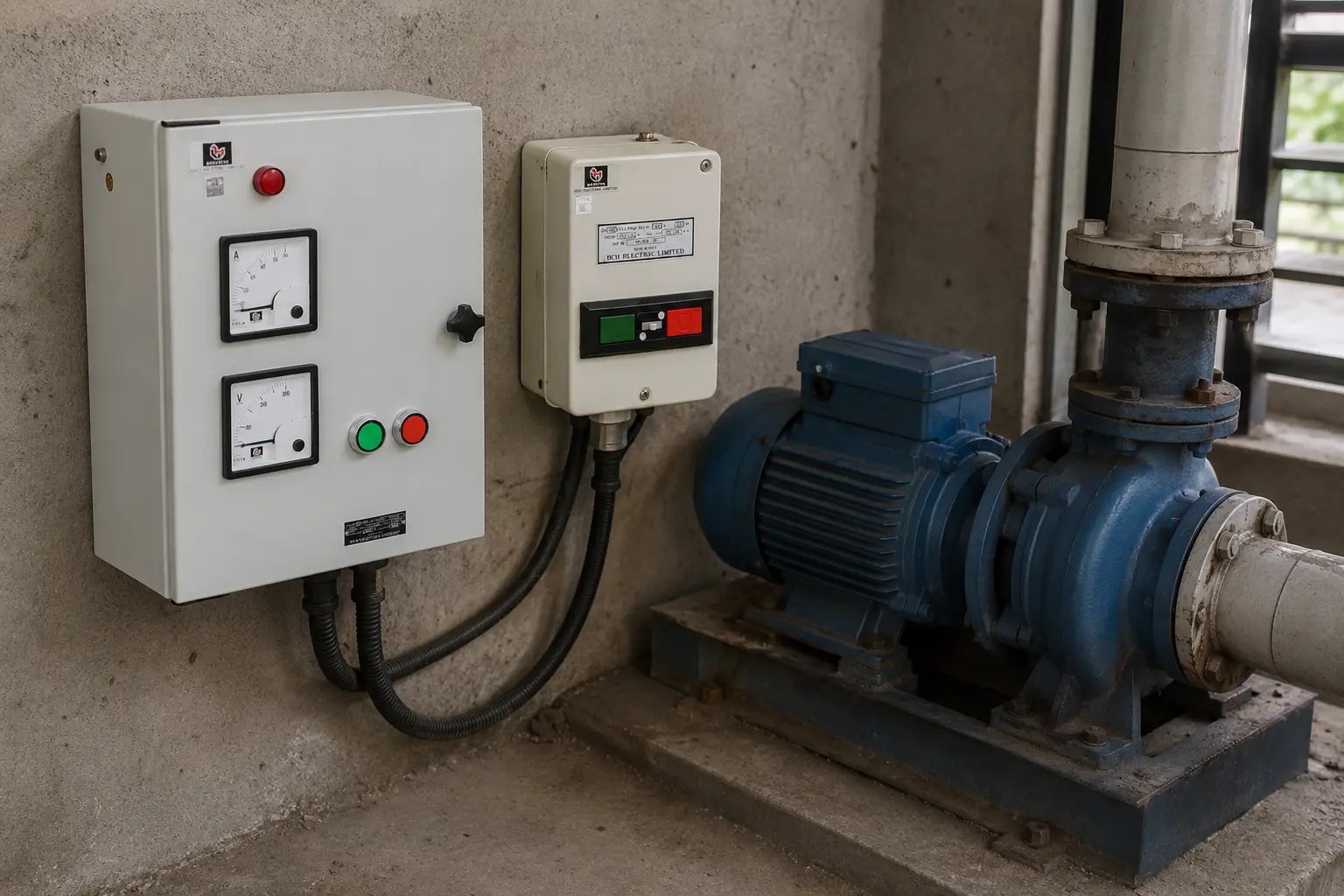
BCH offers DOL starter options with contactor and overload relay combinations, along with submersible pump starter variants that may include ammeter and voltmeter options. These features can support safer motor operation, better monitoring and dependable pump control.
For users who are unsure which starter will fit their pump requirement, it is better to speak with a product expert before final selection. You can contact BCH India for product guidance and support.
FAQs on Single Phase DOL Starter for Water Pumps
1. Which starter is best for a single phase water pump?
A single phase DOL starter with the correct HP rating, suitable overload relay range, durable contactor and proper enclosure is a good choice for many single phase water pump applications.
2. Can I use a DOL starter for a submersible pump?
Yes, DOL starters and submersible pump starters are commonly used for pump control applications. The right selection depends on pump HP, current rating, voltage condition and required features such as ammeter or voltmeter.
3. What is the role of an overload relay in a pump starter?
The overload relay protects the motor by tripping the circuit when the motor draws more current than the safe limit. This helps prevent overheating and motor winding damage.
4. Why does my water pump starter trip again and again?
Frequent tripping may happen due to overload, wrong relay setting, low voltage, wiring issues, mechanical blockage or motor fault. The complete pump and starter system should be checked by a qualified electrician.
5. What affects the price of a single phase DOL starter?
The price depends on HP rating, current range, contactor quality, overload relay type, enclosure quality, metering options, manual or auto operation and brand support.
Conclusion
The best single phase DOL starter for water pumps is the one that matches your motor rating, provides reliable overload protection, uses quality components and suits your site conditions. For water pump applications, safety and durability are more important than choosing the lowest-priced starter.
Before buying, check the pump HP, full load current, overload relay range, enclosure quality, metering needs and operation type. A correctly selected DOL starter can help protect the motor, reduce breakdowns and improve long-term pump performance.
If you are looking for a reliable motor starter for pump applications, explore BCH’s DOL Starter range or contact BCH India for expert assistance.
