
Introduction
An overload relay is one of the most important protection devices used in industrial motor control systems. It helps protect motors from excessive current, overheating and long-term damage caused by overload conditions.
However, installing an overload relay is only the first step. The relay must be selected and set correctly according to the motor’s full load ampere rating, commonly known as FLA. If the relay setting is too low, the motor may trip frequently even during normal operation. If the setting is too high, the motor may remain unprotected during overload conditions.
This guide explains how to understand overload relay setting charts, how to match current range with motor FLA, what trip class means, and how to select the right overload relay for industrial motors.
What Is an Overload Relay?
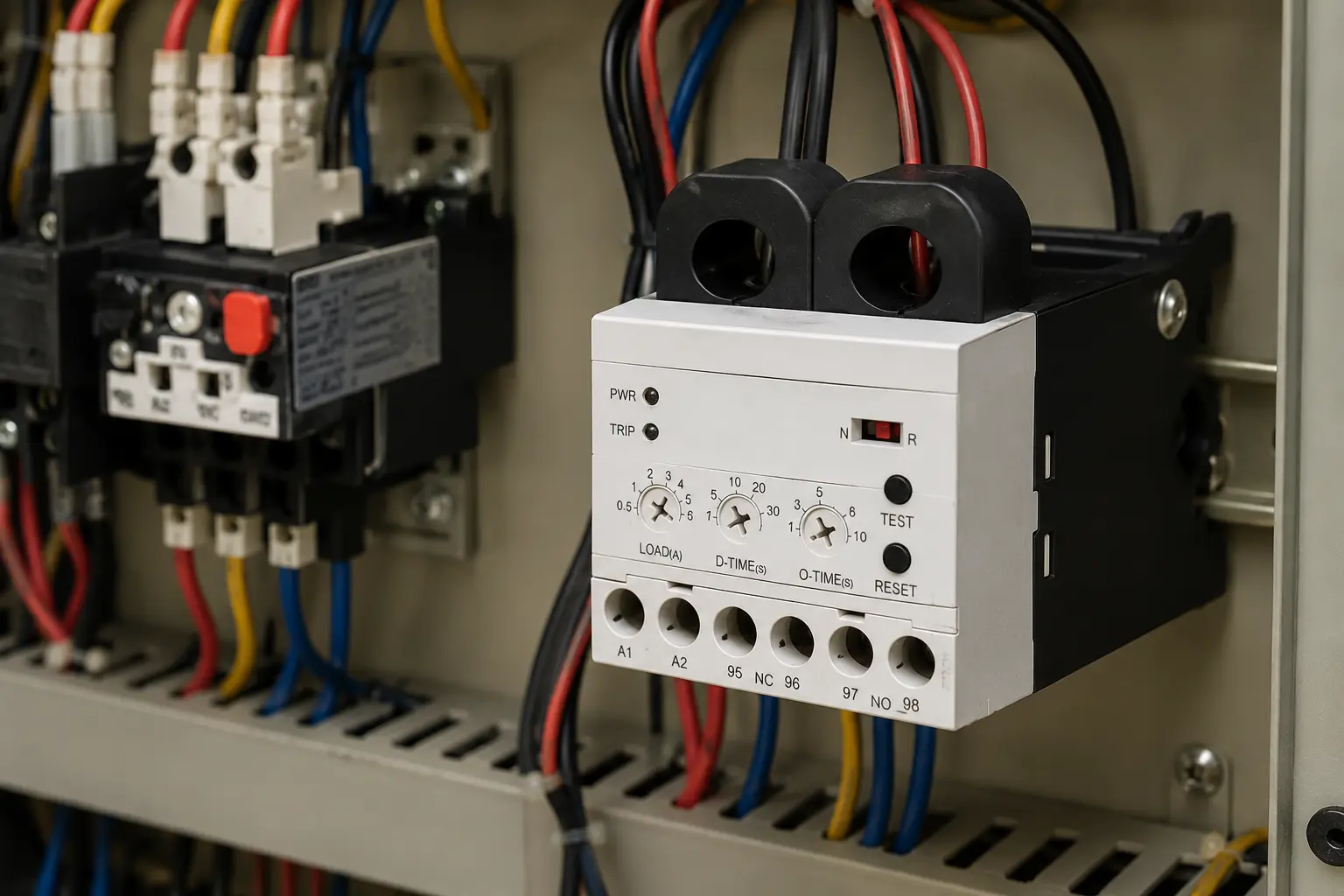
An overload relay is a motor protection device used with contactors and motor starters. Its main function is to monitor the current drawn by the motor and disconnect the motor circuit when the current exceeds a safe limit for a specific time.
It is commonly used in:
- DOL starters
- Star-delta starters
- Motor control panels
- Pump panels
- Compressor panels
- Conveyor systems
- Industrial machines
An overload relay mainly protects against overload conditions. It does not replace short circuit protection devices such as MCBs, MCCBs or fuses. In a motor control circuit, the contactor handles switching, while the overload relay handles motor overload protection.
For industrial motor safety, BCH India offers a wide range of overload relay solutions suitable for different motor protection applications.
Why Correct Overload Relay Setting Is Important
A motor may draw excessive current because of low voltage, heavy load, mechanical jam, phase imbalance, bearing issues, poor alignment or continuous operation under stress. If this condition continues, the motor winding may overheat and fail.
Correct overload relay setting helps:
- Protect motor windings from overheating
- Reduce motor failure and downtime
- Avoid nuisance tripping
- Improve panel safety
- Increase equipment life
- Reduce repair and maintenance costs
If an overload relay trips frequently, the problem may not always be the relay. It could be due to wrong relay setting, wiring issues, load problems or motor faults. For practical diagnosis, you can read this guide on overload relay reset and troubleshooting for industrial motors.
What Is FLA in Overload Relay Setting?
FLA stands for Full Load Ampere. It is the current a motor draws when operating at its rated load and rated voltage. This value is usually mentioned on the motor nameplate.
FLA is important because overload relay setting should be based on the motor’s actual current rating, not only on HP or kW. Two motors with the same HP can have different current ratings depending on efficiency, voltage, design, power factor and manufacturer specifications.
Before setting an overload relay, always check:
- Motor HP or kW
- Rated voltage
- Full load current
- Duty cycle
- Service factor
- Application load type
The motor nameplate FLA should be the primary reference for relay setting.
Basic Overload Relay Setting Rule
In most industrial applications, the overload relay is set close to the motor’s full load current.
Basic rule:
Overload relay setting = Motor nameplate FLA
However, the final setting may vary depending on application, service factor, relay type, ambient temperature, motor duty and manufacturer recommendations.
The aim is simple: the relay should allow normal motor running but trip when the motor operates under unsafe overload conditions.
Overload Relay Setting Chart for Industrial Motors
The chart below gives a practical reference for overload relay selection. Actual current values may vary based on voltage, motor efficiency and manufacturer design. Always use the motor nameplate FLA for final setting.
|
Motor Rating |
Common Application |
Approx. FLA Range |
Relay Selection Guide |
|
0.5 HP |
Small pump, fan |
1–2 A |
Select relay range covering FLA |
|
1 HP |
Pump, blower |
2–4 A |
Match with motor nameplate current |
|
2 HP |
Pump, small compressor |
4–7 A |
Choose adjustable range around FLA |
|
3 HP |
Fan, pump, machine tool |
6–10 A |
Avoid extreme end of relay range |
|
5 HP |
Conveyor, compressor |
8–15 A |
Select relay as per motor current |
|
7.5 HP |
Industrial pump, blower |
12–22 A |
Check load and starting condition |
|
10 HP |
Conveyor, compressor |
18–30 A |
Select suitable trip class |
|
15 HP |
Heavy pump, mixer |
25–45 A |
Match relay, contactor and starter |
|
20 HP |
Industrial machine |
35–60 A |
Use nameplate current as reference |
|
25 HP+ |
Heavy-duty load |
As per nameplate |
Consult technical datasheet |
This chart should be used as a selection guide only. Final settings must be based on the actual motor nameplate and product datasheet.
How to Select the Right Overload Relay Range
1. Check the Motor Nameplate
Start with the motor nameplate. Note the FLA, voltage, HP/kW, frequency and duty cycle. Do not select the relay only by motor HP.
2. Choose a Relay Range That Covers FLA
The relay’s adjustable current range should comfortably include the motor FLA. For example, if the motor FLA is 9 A, a relay range of 7–10 A may be more suitable than a range where 9 A falls at the extreme limit.
3. Match the Relay with the Contactor
An overload relay must be compatible with the contactor and starter assembly. Check current rating, mounting type, terminal arrangement and panel design before final selection.
4. Consider the Application
Different loads behave differently. Pumps, fans, compressors, conveyors and crushers all have different starting and running conditions. The heavier the load, the more carefully the trip class and relay range should be selected.
5. Compare Thermal and Electronic Options
Thermal overload relays are commonly used for standard motor protection. Electronic overload relays may offer more precise protection and advanced features. If you are comparing both, this guide on thermal vs electronic overload relay can help you decide.
What Is Trip Class in an Overload Relay?
Trip class defines how quickly an overload relay trips when the motor current exceeds a specific overload level. It helps match protection with the motor’s starting time and load condition.
Common trip classes include:
- Class 10: Suitable for normal starting motors such as pumps, fans and standard machines
- Class 20: Suitable for motors with medium starting time, such as compressors and conveyors
- Class 30: Suitable for heavy starting or high-inertia loads such as crushers, large conveyors and heavy machinery
Choosing the wrong trip class can cause either nuisance tripping or delayed protection. The trip class should always match the motor’s starting behavior.
Overload Relay Setting for DOL and Star-Delta Starters
In a DOL starter, the motor receives full voltage at startup, which creates high starting current for a short duration. The overload relay should allow this normal starting current but trip during sustained overload.
In star-delta starters, relay selection can be more complex because the relay position and current relationship may vary depending on wiring design. Always follow the starter wiring diagram and manufacturer recommendation.
For both starter types, check:
- Motor FLA
- Relay current range
- Trip class
- Contactor compatibility
- Wiring and terminal tightness
- Actual load condition
Common Overload Relay Setting Mistakes
Setting the Relay Too High
Increasing the setting to avoid tripping can be dangerous. It may allow the motor to run under unsafe overload conditions.
Selecting Only by HP
Motor HP is not enough. Always check the nameplate FLA.
Ignoring Trip Class
The wrong trip class can cause frequent tripping or delayed motor protection.
Using the Wrong Relay Range
A relay with an unsuitable current range may not provide accurate protection.
Not Checking Load and Voltage
Low voltage, mechanical overload, phase imbalance and poor wiring can cause excess current even when the relay setting is correct.
Overload Relay Selection Checklist
Before finalizing your overload relay, check the following:
| Checkpoint | Why It Matters |
| Motor FLA checked | Ensures correct setting |
| Relay range matches FLA | Provides accurate protection |
| Trip class selected | Matches starting condition |
| Contactor compatibility | Ensures proper assembly |
| Load type reviewed | Avoids nuisance tripping |
| Wiring inspected | Reduces heating and failure |
| Voltage condition checked | Prevents abnormal current draw |
| Reset mode selected | Improves safety and operation |
For a broader product comparison, you can also read this guide on the best overload relays for industrial applications.
Why Choose BCH India Overload Relays?
BCH India overload relays are designed for reliable motor protection in industrial applications. They are suitable for use in motor starters, control panels, pump panels, compressor panels, conveyors and machine control systems.
BCH offers thermal and electronic overload relay options to support different protection needs. When selected and set correctly, these relays help improve motor safety, reduce downtime and protect electrical equipment from overload-related damage.
You can explore BCH India’s overload relay range for suitable motor protection solutions.
FAQs
1. What should be the overload relay setting for a motor?
The overload relay is generally set according to the motor’s nameplate full load current. Final settings should also consider application, service factor and manufacturer recommendations.
2. How do I choose overload relay range?
Choose a relay range that includes the motor FLA and allows accurate adjustment. Avoid selecting a relay where the motor current falls at the extreme end of the range.
3. What is FLA in overload relay setting?
FLA means Full Load Ampere. It is the current drawn by the motor when it runs at rated load and voltage.
4. What is an overload relay trip class?
Trip class defines how quickly the relay trips during overload. Class 10, Class 20 and Class 30 are commonly used for different motor starting conditions.
5. Can overload relay protect against short circuit?
No. An overload relay protects against overload. Short circuit protection should be handled by MCBs, MCCBs or fuses.
Conclusion
An overload relay protects an industrial motor only when it is selected and set correctly. The most important factors are motor FLA, relay current range, trip class, starter type and application load.
Always use the motor nameplate current as the main reference and avoid increasing the relay setting just to stop tripping. If the relay trips frequently, identify the root cause instead of bypassing protection.
For the right overload relay selection for your application, explore BCH India’s overload relay range or contact BCH India for expert support.
