
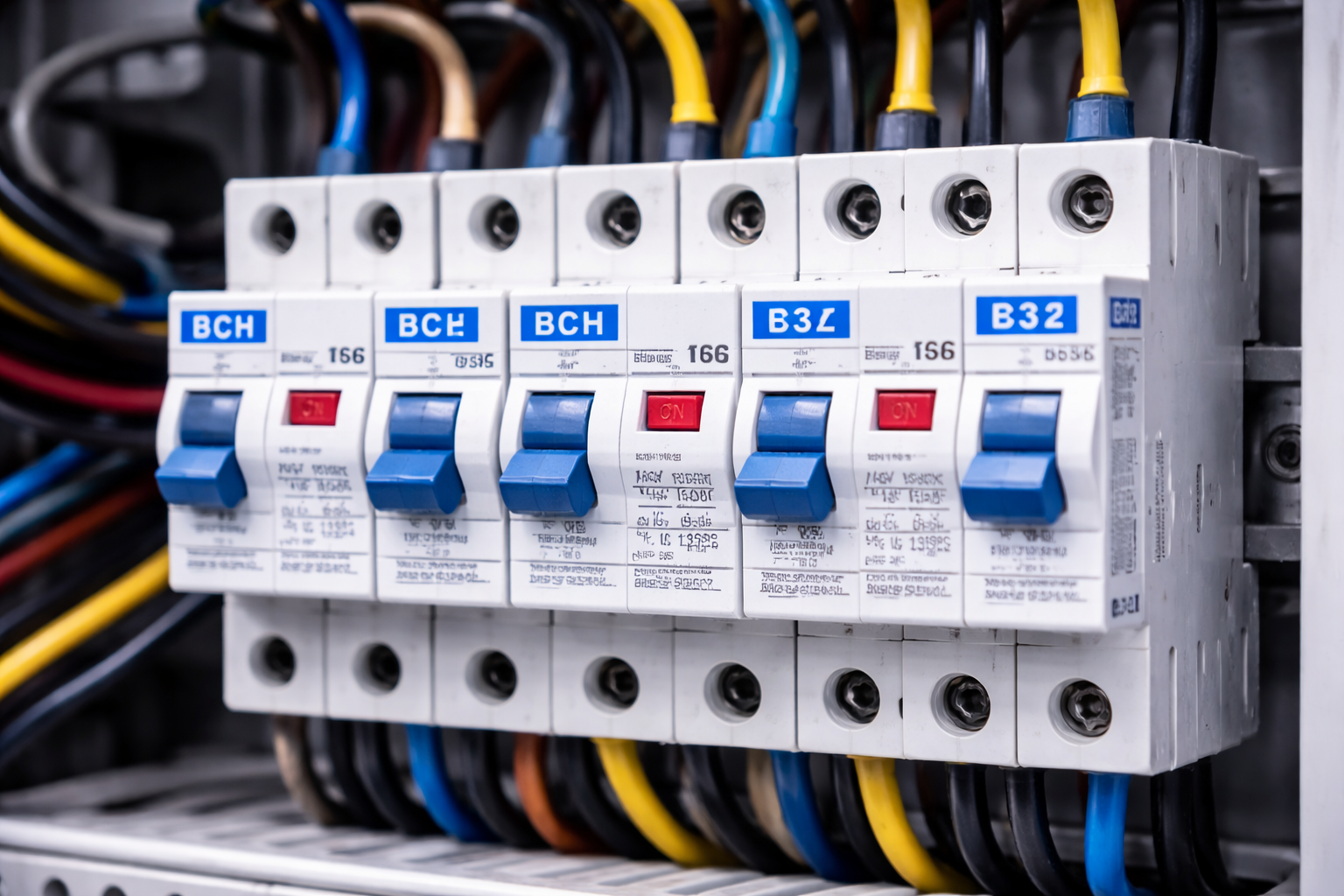
Miniature Circuit Breakers (MCBs) are one of the most critical components in any electrical distribution system. Whether in commercial buildings, factories, or industrial panels, MCBs provide essential protection against overload and short-circuit faults.
However, even the best MCB cannot perform effectively if it is installed incorrectly. Improper installation can lead to overheating, nuisance tripping, equipment damage, and serious safety risks.
This guide provides a step-by-step MCB installation process for industrial and commercial panels, along with best practices, safety tips, and common mistakes to avoid.
What Is an MCB and Why Proper Installation Matters?
An MCB (Miniature Circuit Breaker) is an automatic protective device that disconnects electrical circuits during:
- Overload conditions
- Short circuits
It protects:
- Electrical wiring
- Equipment
- Personnel
Proper installation ensures:
- Accurate tripping
- Reliable performance
- Long operational life
- Electrical safety compliance
Even high-quality products from trusted manufacturers like BCH India require correct installation to deliver optimal performance.
Tools and Materials Required for MCB Installation
Before starting installation, ensure you have:
- Insulated screwdrivers
- Wire stripper
- Multimeter
- Voltage tester
- DIN rail (if not pre-installed)
- Cable lugs and ferrules
- Proper size cables
Using the right tools ensures safe and efficient installation.
Step-by-Step MCB Installation Process
Step 1: Turn Off Power Supply
Safety comes first.
- Switch OFF the main power supply
- Use a voltage tester to confirm no current is present
- Lockout/tagout procedures should be followed in industrial environments
Never install MCBs on a live circuit.
Step 2: Select the Correct MCB
Before installation, confirm:
- Rated current (A)
- Breaking capacity (kA)
- Trip curve (B, C, D)
- Number of poles
Selecting the correct MCB is essential for proper protection.
Step 3: Mount the MCB on DIN Rail
Most MCBs are designed for DIN rail mounting.
- Align the MCB with the DIN rail
- Hook the top portion
- Press the bottom until it clicks into place
Ensure the MCB is firmly secured and properly aligned.
Step 4: Prepare the Electrical Wires
Proper wire preparation is critical.
- Strip insulation carefully
- Use appropriate cable size
- Avoid damaging conductor strands
- Use ferrules or lugs for better connections
Poor wiring can lead to overheating and loose connections.
Step 5: Connect Input and Output Terminals
MCBs have clearly marked terminals:
- Top terminals – usually supply (line)
- Bottom terminals – load
Steps:
- Insert wire into terminal
- Tighten screw securely
- Ensure no loose strands are exposed
Always follow manufacturer guidelines for terminal connections.
Step 6: Tighten Terminals to Proper Torque
Loose connections are a major cause of electrical failures.
- Use recommended torque settings
- Avoid over-tightening
- Ensure firm and secure contact
Proper tightening ensures good electrical conductivity and reduces heat buildup.
Step 7: Check Busbar Connections (If Used)
In panel installations, MCBs are often connected using busbars.
Ensure:
- Proper alignment
- Tight connections
- Compatibility with MCB design
Busbars improve panel organization and reduce wiring complexity.
Step 8: Label the Circuit
Proper labeling is essential for maintenance and troubleshooting.
- Label each MCB clearly
- Indicate circuit function (e.g., lighting, motor, HVAC)
This helps in quick identification during faults or maintenance.
Step 9: Test the Installation
Before energizing:
- Check all connections
- Ensure proper wiring
- Verify insulation integrity
After turning ON power:
- Test MCB operation
- Confirm load functionality
- Check for abnormal heating
Testing ensures the system is functioning correctly.
Best Practices for MCB Installation
1. Use Correct Cable Size
Always match cable size with:
- MCB rating
- Load current
Undersized cables can overheat, while oversized cables increase cost unnecessarily.
2. Maintain Proper Spacing
In panel installations:
- Avoid overcrowding
- Ensure proper airflow
- Maintain spacing between devices
This helps in heat dissipation and improves reliability.
3. Ensure Proper Earthing
Earthing is critical for safety.
- Check grounding connections
- Ensure proper bonding
- Verify continuity
Proper earthing protects against electrical faults and shock hazards.
4. Follow Standard Wiring Practices
Use:
- Color-coded wires
- Neat cable routing
- Secure cable management
Organized wiring improves safety and maintenance efficiency.
5. Choose Quality Components
Using high-quality MCBs ensures:
- Reliable protection
- Longer lifespan
- Reduced maintenance
Low-quality MCBs may fail during critical fault conditions.
Common Mistakes to Avoid During Installation
Avoid these errors:
- Installing MCB without checking rating
- Loose terminal connections
- Wrong input-output wiring
- Overloading circuits
- Ignoring busbar compatibility
- Using damaged wires
These mistakes can lead to serious safety issues.
MCB Installation in Industrial Panels
Industrial panels require additional considerations:
- Higher fault levels
- Multiple circuits
- Complex load distribution
- Coordination with MCCBs and relays
MCBs are often used for:
- Control circuits
- Lighting circuits
- Auxiliary systems
Proper coordination ensures selective tripping and system stability.
MCB Installation in Commercial Panels
Commercial installations involve:
- Office buildings
- Shopping complexes
- Hospitals
- Hotels
Key considerations include:
- Load balancing
- Safety compliance
- Reliable operation
MCBs ensure safe power distribution across multiple circuits.
Importance of Regular Inspection After Installation
Even after installation, periodic checks are necessary.
Inspect for:
- Loose connections
- Overheating
- Dust accumulation
- Proper operation
Routine maintenance ensures long-term reliability.
Role of BCH India in Electrical Protection Solutions
Reliable circuit protection begins with quality components.
BCH India offers electrical solutions designed for industrial and commercial applications. Through https://bchindia.com/, professionals can access:
- Product specifications
- Technical guidance
- Electrical protection solutions
This helps ensure proper selection and installation of MCBs.
Safety Guidelines for Electricians
Always follow these safety measures:
- Turn off power before installation
- Use insulated tools
- Wear protective equipment
- Follow electrical safety standards
- Avoid working in wet conditions
Safety should always be the top priority.
Future Trends in Panel Installation
Electrical panels are evolving with:
- Smart monitoring systems
- Compact modular designs
- Energy-efficient solutions
- IoT-enabled devices
Proper installation practices remain essential even with advanced technologies.
Conclusion
Installing MCBs correctly is critical for ensuring safe and reliable electrical systems in industrial and commercial environments.
By following proper installation procedures and best practices, electricians can:
- Improve system safety
- Reduce electrical failures
- Enhance performance
- Extend equipment lifespan
From selecting the right MCB to ensuring proper wiring and testing, every step plays a vital role in achieving a reliable electrical setup.
