
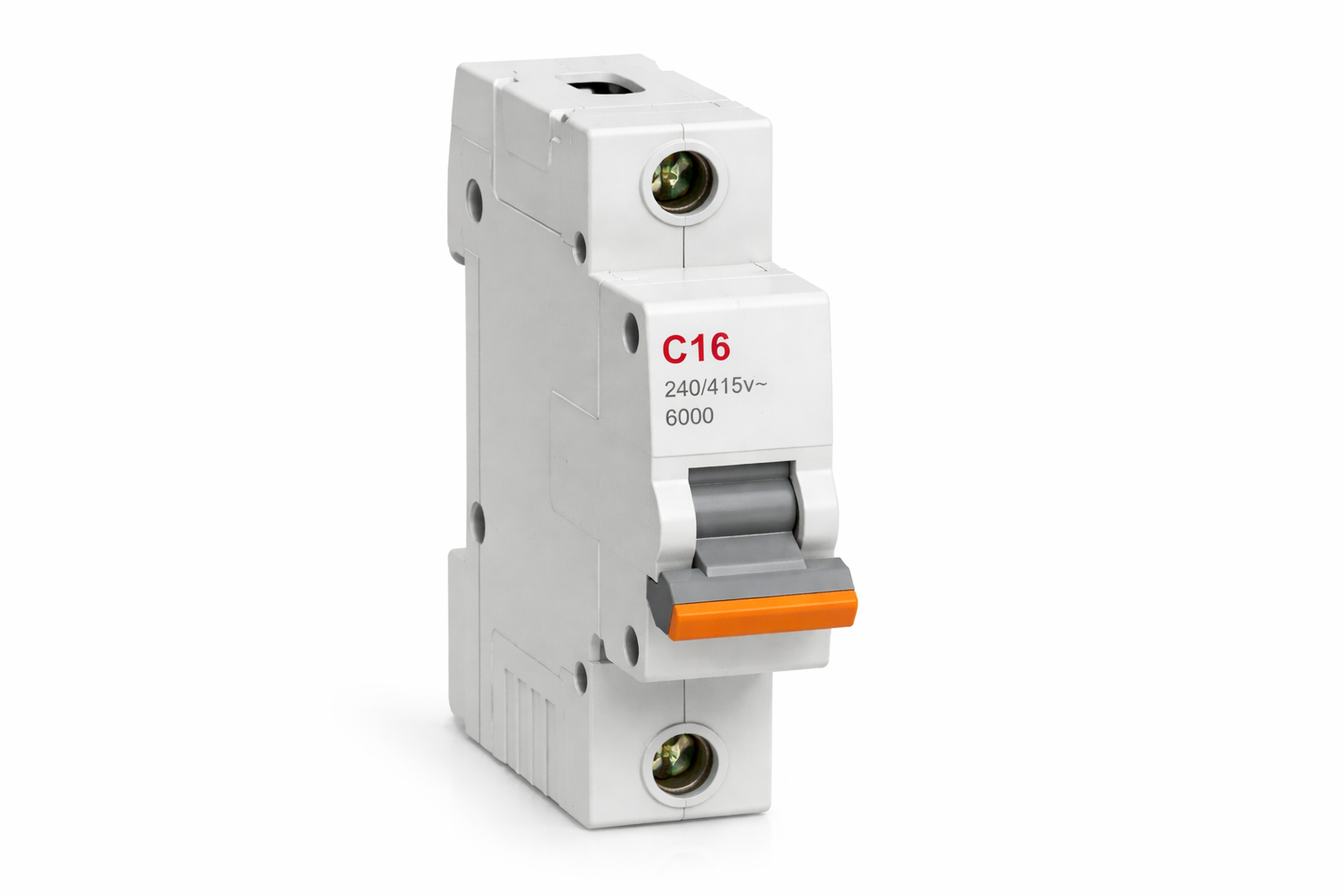
Electrical safety is one of the most critical aspects of any power distribution system. Whether it’s a residential building, commercial facility, or industrial installation, protecting electrical circuits from overload and short circuits is essential to prevent equipment damage, electrical fires, and costly downtime.
One of the most commonly used protection devices is the Miniature Circuit Breaker (MCB). However, selecting the right MCB is not as simple as choosing a random ampere rating. Proper selection requires understanding the electrical load, system configuration, breaking capacity, and operating environment.
This MCB selection guide explains how to choose the right MCB for your electrical system, helping electricians and engineers ensure reliable circuit protection.
What Is an MCB?
A Miniature Circuit Breaker (MCB) is an automatic electrical switch designed to protect circuits from:
-
Overload conditions (when current exceeds the circuit’s rated capacity)
-
Short circuit faults (sudden high current due to conductor contact)
When such faults occur, the MCB automatically trips, disconnecting the circuit and preventing damage.
Unlike traditional fuses, MCBs offer several advantages:
-
Reusable after tripping
-
Faster response to faults
-
Clear indication of fault conditions
-
Easier maintenance and reset
Because of these advantages, MCBs are widely used in modern electrical systems.
Why Correct MCB Selection Is Important
Choosing the wrong MCB can cause several problems:
-
Frequent nuisance tripping
-
Failure to protect equipment
-
Overheating of cables
-
Reduced electrical system reliability
-
Potential fire hazards
Correct MCB selection ensures:
-
Reliable fault protection
-
Longer equipment lifespan
-
Efficient electrical operation
-
Compliance with safety standards
Proper selection is therefore essential for both safety and performance.
Key Factors to Consider When Selecting an MCB
Selecting the right MCB involves evaluating multiple technical parameters.
1. Rated Current (Ampere Rating)
The rated current determines how much current the MCB can carry continuously without tripping.
Common ratings include:
-
6A
-
10A
-
16A
-
20A
-
25A
-
32A
-
40A
-
63A
How to Choose the Correct Rating
The MCB rating should be selected based on:
-
Load current requirement
-
Cable capacity
-
Safety margin
For example:
| Application | Typical MCB Rating |
|---|---|
| Lighting circuits | 6A – 10A |
| Power sockets | 16A – 20A |
| Air conditioners | 20A – 32A |
| Industrial equipment | 32A – 63A |
Always ensure the MCB rating does not exceed the current carrying capacity of the wiring.
2. Breaking Capacity (kA Rating)
Breaking capacity defines the maximum fault current the MCB can safely interrupt without damage.
Typical breaking capacities include:
-
6kA – suitable for residential systems
-
10kA – suitable for commercial installations
-
Higher values – used in industrial environments
If the fault current in the system exceeds the MCB’s breaking capacity, the device may fail during a short circuit.
Selecting adequate breaking capacity ensures safe fault interruption.
3. Trip Curve Type
MCBs are available with different trip curves, which determine how quickly the breaker trips under overcurrent conditions.
B Curve MCB
Trips at 3–5 times rated current
Best suited for:
-
Residential lighting circuits
-
Small appliances
C Curve MCB
Trips at 5–10 times rated current
Suitable for:
-
Commercial installations
-
Moderate inductive loads
-
Motors and transformers
D Curve MCB
Trips at 10–20 times rated current
Used for:
-
Heavy motors
-
Industrial machinery
-
High inrush current loads
Choosing the correct trip curve prevents nuisance tripping while maintaining proper protection.
4. Number of Poles
MCBs are available with different pole configurations depending on the power supply system.
Single Pole (SP)
Used in single-phase circuits such as lighting and small appliances.
Double Pole (DP)
Provides isolation for both phase and neutral conductors.
Triple Pole (TP)
Used in three-phase industrial systems.
Four Pole (TPN)
Provides protection for three-phase systems including neutral.
Correct pole selection ensures proper isolation and system safety.
5. Voltage Rating
MCBs must match the system voltage.
Typical voltage ratings include:
-
240V for single-phase systems
-
415V for three-phase systems
Using an MCB with incorrect voltage rating can compromise protection performance.
6. Load Type
Different loads behave differently during startup.
Examples:
-
Resistive loads – heaters, lighting
-
Inductive loads – motors, transformers
-
Electronic loads – computers, UPS systems
Inductive loads often have high inrush currents, which require appropriate trip curves to avoid nuisance tripping.
Understanding load characteristics is essential for proper MCB selection.
7. Environmental Conditions
The operating environment affects MCB performance.
Factors to consider include:
-
Ambient temperature
-
Dust levels
-
Humidity
-
Vibration
In industrial settings, choosing durable MCBs designed for harsh environments ensures reliable performance.
Manufacturers such as BCH India design electrical protection devices suitable for demanding operating conditions.
8. Coordination with Other Protection Devices
MCBs often work alongside other protective devices such as:
-
RCCBs
-
MCCBs
-
Overload relays
Proper coordination ensures that:
-
Only the faulty circuit trips
-
The entire system does not shut down unnecessarily
This improves operational continuity and system stability.
Typical MCB Applications in Electrical Systems
MCBs are used across various electrical systems.
Residential Installations
Used in distribution boards for:
-
Lighting circuits
-
Power outlets
-
Air conditioners
Commercial Buildings
Used in offices, shopping centers, and hotels for circuit protection.
Industrial Facilities
Used in motor control panels, machinery circuits, and distribution systems.
In all these applications, selecting the correct MCB ensures safe and reliable power distribution.
Common Mistakes to Avoid When Selecting an MCB
Many electrical issues occur because of incorrect MCB selection.
Common mistakes include:
Oversizing the MCB
Using a higher ampere rating than required can allow excessive current through cables, leading to overheating.
Ignoring Breaking Capacity
Selecting a low kA rating may cause the MCB to fail during high fault currents.
Choosing the Wrong Trip Curve
Using the wrong curve type may lead to nuisance tripping or inadequate protection.
Poor Quality Products
Low-quality MCBs may not trip accurately, compromising safety.
Avoiding these mistakes is critical for reliable circuit protection.
How Quality MCBs Improve Electrical System Reliability
High-quality MCBs offer several advantages:
-
Reliable overload and short-circuit protection
-
Longer operational life
-
Reduced maintenance requirements
-
Stable performance under varying conditions
-
Improved safety for electrical installations
Choosing reputable manufacturers ensures better product consistency and technical support.
BCH India offers electrical protection solutions designed for modern infrastructure. The official website https://bchindia.com/ provides technical resources and product information to help professionals choose appropriate circuit protection devices.
Future Trends in Circuit Protection
Electrical systems continue to evolve with technologies such as:
-
Smart homes
-
Industrial automation
-
Renewable energy integration
-
Electric vehicle charging systems
As electrical loads grow more complex, circuit protection devices like MCBs must provide:
-
Higher reliability
-
Better fault detection
-
Compatibility with modern systems
Selecting the right MCB today helps ensure future-ready electrical infrastructure.
Conclusion
Selecting the right MCB is essential for protecting electrical circuits and ensuring the safety of both equipment and people.
When choosing an MCB, consider the following key factors:
-
Rated current
-
Breaking capacity
-
Trip curve type
-
Pole configuration
-
Voltage rating
-
Load characteristics
-
Environmental conditions
-
Coordination with other protection devices
A well-selected MCB improves system reliability, reduces electrical risks, and enhances long-term performance.
For detailed product specifications, application guidance, and electrical protection solutions, professionals can explore resources available at https://bchindia.com/.
