
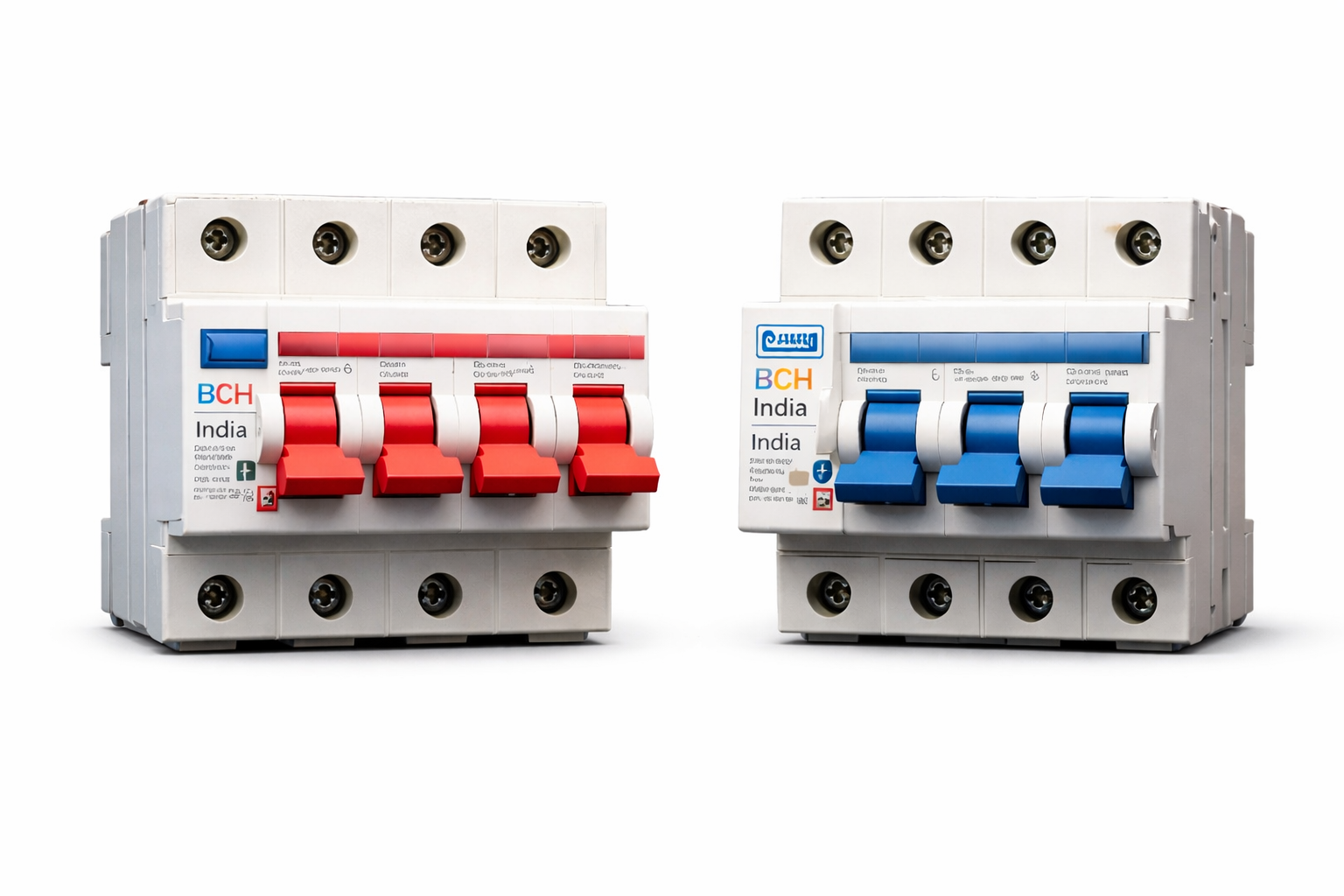
Electrical safety standards and technology continue to evolve rapidly. In 2026, selecting the right Miniature Circuit Breaker (MCB) is no longer just about choosing the correct ampere rating. With increasing load complexity, smart homes, automation systems, EV chargers, and energy-efficient appliances, modern electrical installations demand more reliable and advanced protection devices.
MCBs remain the first line of defense against overload and short-circuit faults, but the features you should look for today are more advanced than ever.
In this guide, we explore the top MCB features you should look for in 2026, helping electricians, engineers, and facility managers make informed purchasing decisions.
Why MCB Selection Matters More in 2026
Electrical networks today face:
- Higher connected loads
- Increased electronic equipment usage
- Fluctuating voltage conditions
- Smart building integration
- Greater safety expectations
A poorly selected MCB can lead to:
- Frequent nuisance tripping
- Equipment damage
- Overheating
- Reduced protection reliability
- Safety hazards
Modern MCBs must deliver not only protection but also stability, durability, and compatibility with evolving electrical systems.
1. Compliance with Updated Safety Standards
The most important feature in any MCB is compliance with recognized standards.
In India and globally, MCBs should comply with:
- IS/IEC 60898 (for household and similar installations)
- IEC standards for industrial applications
Standards ensure:
- Reliable breaking capacity
- Thermal stability
- Safe operation under fault conditions
- Endurance testing compliance
When selecting an MCB in 2026, always verify:
✔ Clear marking of standard compliance
✔ Rated breaking capacity (kA)
✔ Certification authenticity
Brands like BCH India manufacture MCBs aligned with recognized safety standards, ensuring dependable performance.
2. Adequate Breaking Capacity (kA Rating)
Breaking capacity defines how much fault current the MCB can safely interrupt.
Common ratings include:
- 6kA
- 10kA
- Higher for specific applications
In 2026, with increased transformer capacities and dense urban infrastructure, selecting the right breaking capacity is critical.
Choose:
- 6kA for standard residential installations
- 10kA for commercial buildings or areas with higher fault levels
Never compromise on kA rating—it directly affects safety during short circuits.
3. High-Quality Thermal-Magnetic Trip Mechanism
Modern MCBs use a thermal-magnetic mechanism:
- Thermal element protects against overload
- Magnetic element protects against short circuit
Look for:
✔ Fast magnetic response
✔ Accurate overload tripping
✔ Stable performance across temperature variations
A reliable trip mechanism prevents both under-tripping (unsafe) and nuisance tripping (inconvenient).
4. Superior Contact Material & Arc Control
During a short circuit, intense arcs are generated inside the MCB.
Premium MCBs feature:
- High-quality silver alloy contacts
- Efficient arc chute design
- Rapid arc extinction
These features ensure:
- Reduced contact wear
- Longer electrical life
- Enhanced safety
In 2026, arc suppression design is more critical than ever due to increasing load densities.
5. Mechanical Durability & Long Electrical Life
An MCB is frequently switched ON/OFF for:
- Maintenance
- Circuit isolation
- Load management
Look for:
✔ High mechanical endurance rating
✔ Strong toggle mechanism
✔ Smooth switching action
✔ Clear ON/OFF indication
A robust build ensures reliability even after thousands of operations.
6. Compact & Modular Design
Electrical panels today are becoming more compact due to:
- Space limitations
- High circuit density
- Smart panel integration
Modern MCBs should offer:
- Slim profile design
- Standard DIN rail mounting
- Easy busbar compatibility
Compactness improves panel organization and simplifies installation.
7. Clear Markings & Labeling
In large installations, clear labeling is essential.
Look for:
✔ Clear ampere rating marking
✔ Curve type indication (B, C, D curve)
✔ Terminal identification
✔ Standard markings
Proper marking improves installation accuracy and reduces wiring errors.
8. Multiple Trip Curve Options (B, C, D)
Different loads require different trip curves:
- B Curve – Residential lighting and general loads
- C Curve – Commercial and moderate inductive loads
- D Curve – High inrush loads like motors and transformers
In 2026, selecting the correct trip curve is more important due to:
- Motor-driven appliances
- HVAC systems
- Industrial automation
Always match curve type with load characteristics.
9. Resistance to Nuisance Tripping
Modern electrical systems contain:
- LED drivers
- Inverters
- SMPS-based equipment
- Variable frequency drives
These can create transient currents.
High-quality MCBs are designed to:
✔ Handle temporary inrush currents
✔ Avoid false trips
✔ Maintain stable performance under voltage fluctuation
MCBs engineered for Indian grid conditions offer better real-world stability.
10. Heat Dissipation & Terminal Strength
Loose terminals and overheating are common causes of failure.
Look for:
✔ Strong terminal clamping
✔ Proper heat dissipation design
✔ High-quality housing material
This prevents:
- Localized heating
- Insulation damage
- Long-term reliability issues
Durable construction ensures better lifecycle performance.
11. Compatibility with Smart Panels (Future-Ready Design)
With smart homes and smart buildings becoming mainstream, MCBs should be compatible with:
- Smart distribution boards
- Monitoring systems
- Energy management solutions
Even if the MCB itself is not “smart,” it should integrate easily into modern panel configurations.
12. Reliable After-Sales Support & Availability
Protection devices must be:
- Easily available in local markets
- Backed by technical documentation
- Supported by responsive service
Choosing a reliable manufacturer ensures:
- Replacement availability
- Technical guidance
- Consistent product quality
BCH India provides strong distribution presence and product support through https://bchindia.com/, helping professionals select appropriate protection devices.
13. Fire-Resistant & Flame-Retardant Housing
Safety in 2026 goes beyond basic protection.
Look for:
✔ Flame-retardant housing
✔ Heat-resistant materials
✔ Durable insulation
High-quality housing materials reduce fire propagation risk during extreme faults.
14. Ease of Installation
Time-saving installation features include:
- Clearly marked terminals
- Dual termination capability
- Busbar compatibility
- Quick DIN rail mounting
Electricians prefer MCBs that reduce installation time while ensuring secure connections.
15. Balanced Price-to-Performance Ratio
While cost is always a factor, safety should never be compromised.
When comparing MCBs:
- Do not choose solely based on price
- Evaluate build quality
- Check compliance documentation
- Consider long-term reliability
Investing in quality MCBs reduces maintenance costs and improves safety.
Why Quality MCBs Matter More Than Ever
In 2026, electrical systems are more dynamic and interconnected. A failure in one circuit can impact:
- Smart devices
- Network systems
- Security systems
- Industrial automation
Reliable MCBs ensure:
- Safe fault isolation
- Equipment protection
- Reduced downtime
- Long-term performance stability
Conclusion: Choose MCBs Built for Modern Electrical Demands
Selecting the right MCB in 2026 requires more than checking the ampere rating. The best MCBs offer:
- Standard compliance
- Adequate breaking capacity
- Accurate thermal-magnetic protection
- Durable construction
- Trip curve flexibility
- Resistance to nuisance tripping
- Ease of installation
- Long operational life
Manufacturers like BCH India provide reliable MCB solutions designed for Indian operating conditions and evolving safety requirements.
For detailed product specifications, technical support, and application guidance, visit https://bchindia.com/ and explore dependable circuit protection solutions tailored for modern electrical systems.
