
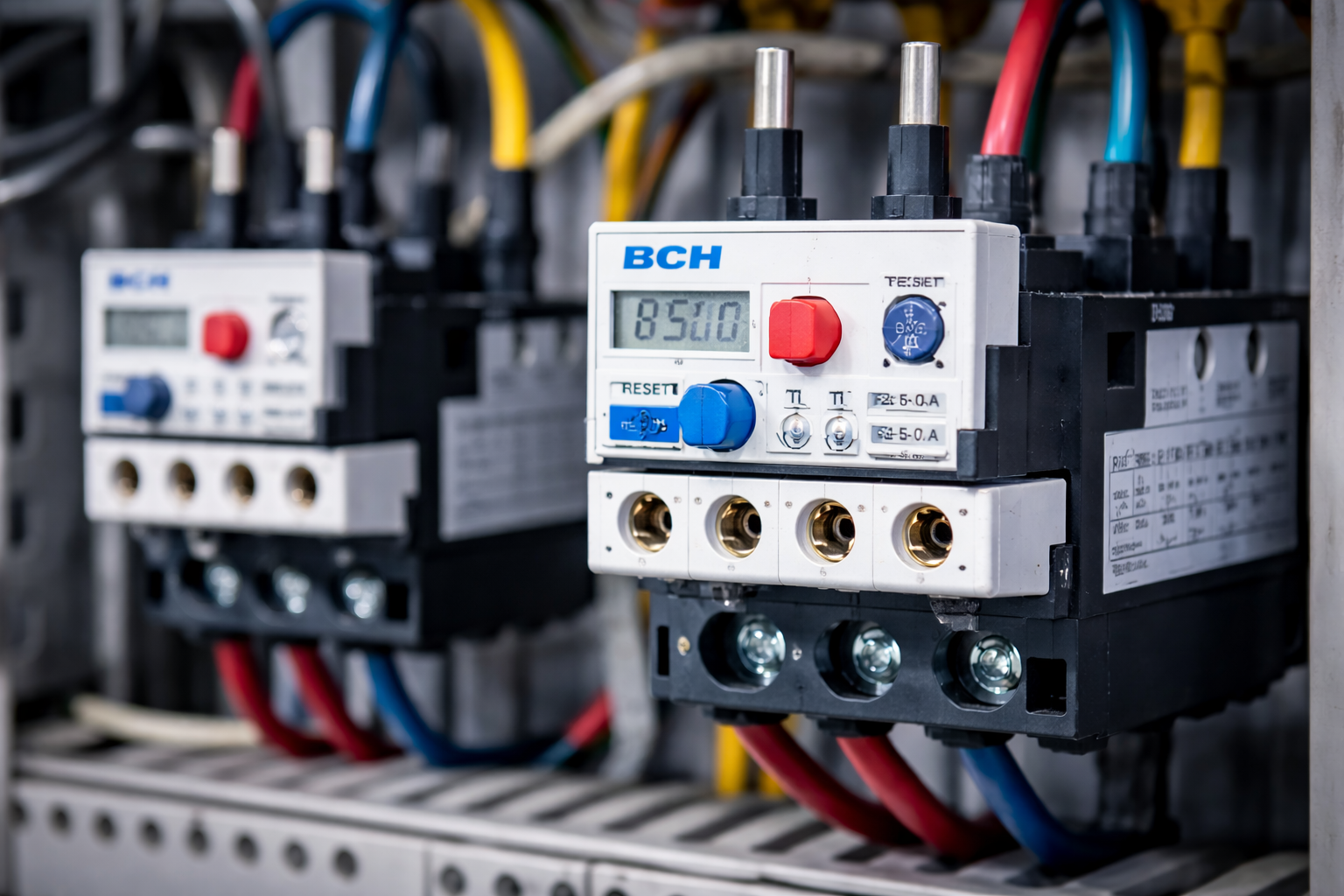
In industrial environments, electric motors are the backbone of operations. From conveyor systems and pumps to compressors and manufacturing equipment, motors run continuously under varying loads. However, one of the most common causes of motor failure is overload conditions, which can lead to overheating, insulation damage, and costly downtime.
To prevent these issues, overload relays are used as a critical protection component in motor control systems. But with multiple options available—thermal, electronic, and advanced smart relays—choosing the best overload relay for industrial applications in 2026 requires a clear understanding of features, performance, and application suitability.
This guide explores the best overload relays for industrial applications, key selection criteria, and how to choose the right solution for modern electrical systems.
What Is an Overload Relay?
An overload relay is a protective device used to safeguard motors from sustained overcurrent conditions. It works alongside contactors to:
- Monitor motor current
- Detect overload conditions
- Trip the circuit when current exceeds safe limits over time
Unlike short-circuit protection devices (MCBs or MCCBs), overload relays allow temporary current surges but protect against prolonged overheating.
Why Overload Relays Are Essential in Industrial Systems
Industrial motors operate in challenging conditions:
- Variable load cycles
- Frequent starts and stops
- Voltage fluctuations
- Harsh environments
Without proper overload protection, motors can experience:
- Overheating and winding damage
- Reduced lifespan
- Increased maintenance costs
- Production downtime
Overload relays ensure safe, efficient, and reliable motor operation, making them indispensable in industrial applications.
Types of Overload Relays Used in Industry
Understanding the different types of overload relays helps in selecting the best option.
1. Thermal Overload Relays
Working Principle:
Operate using a bimetal strip that bends when heated by excess current.
Advantages:
- Simple and cost-effective
- Reliable for basic applications
- Easy to install and maintain
Limitations:
- Less accurate
- Affected by ambient temperature
- Limited protection features
Best For:
- Small industries
- Standard motor applications
- Budget-conscious installations
2. Electronic Overload Relays
Working Principle:
Use electronic sensors and microprocessors to monitor current in real time.
Advantages:
- High accuracy
- Adjustable settings
- Faster response time
- Phase failure and imbalance protection
- Temperature compensation
Limitations:
- Higher cost
- Requires proper setup
Best For:
- Large industrial plants
- Automation systems
- Critical applications
3. Smart Overload Relays (Advanced)
Modern overload relays are evolving with smart features such as:
- Digital monitoring
- Communication with PLC systems
- Fault diagnostics
- Remote monitoring
Best For:
- Industry 4.0 environments
- Smart factories
- High-value equipment
Key Features to Look for in Overload Relays (2026)
1. Accurate Current Sensing
Precision is critical in motor protection. The relay must accurately detect:
- Overload conditions
- Current fluctuations
- Abnormal operating patterns
Electronic relays offer superior accuracy compared to thermal relays.
2. Adjustable Protection Settings
Modern overload relays should allow:
- Adjustable current range
- Trip delay settings
- Reset modes (manual/automatic)
This flexibility helps adapt to different motor requirements.
3. Phase Failure & Imbalance Protection
Three-phase motors are highly sensitive to phase imbalance.
Advanced overload relays can detect:
- Phase loss
- Phase imbalance
- Asymmetrical current
This prevents severe motor damage.
4. Temperature Compensation
Industrial environments often experience temperature variations.
High-quality overload relays offer:
- Temperature compensation
- Stable performance across conditions
This ensures consistent protection.
5. Fast and Reliable Tripping
The relay must respond quickly to prevent damage but avoid nuisance tripping.
Look for:
- Stable tripping characteristics
- Reliable response time
6. Durability and Build Quality
Industrial environments require robust devices.
Choose relays with:
- Strong housing
- Resistance to dust and vibration
- Long operational life
Manufacturers like BCH India design overload relays suitable for real industrial conditions.
7. Compatibility with Contactors
Overload relays must integrate seamlessly with contactors in motor starters.
Ensure:
- Mechanical compatibility
- Electrical coordination
- Easy mounting
8. Ease of Installation and Maintenance
Time-saving features include:
- Clear terminal markings
- Compact design
- Easy adjustment settings
These improve installation efficiency and reduce maintenance time.
Best Overload Relay Applications in Industry
Overload relays are used in various industrial sectors:
Manufacturing Plants
Protect motors used in:
- Assembly lines
- Machine tools
- Automation systems
Pumping Systems
Used in:
- Water treatment plants
- Irrigation systems
- Industrial fluid handling
HVAC Systems
Protect motors in:
- Air handling units
- Compressors
- Cooling systems
Conveyor Systems
Ensure safe operation in:
- Warehouses
- Logistics facilities
- Production lines
Heavy Industries
Used in:
- Steel plants
- Cement industries
- Mining operations
In all these applications, reliable overload protection ensures uninterrupted operations.
Thermal vs Electronic Overload Relay: Which Is Better?
| Feature | Thermal Relay | Electronic Relay |
|---|---|---|
| Accuracy | Moderate | High |
| Cost | Low | Higher |
| Response Time | Slower | Faster |
| Temperature Sensitivity | High | Low |
| Protection Features | Basic | Advanced |
| Best Use | Simple applications | Critical systems |
Conclusion:
- Thermal relays are suitable for basic applications
- Electronic relays are better for modern industrial systems
Common Mistakes to Avoid
Avoid these common errors:
- Choosing based only on price
- Ignoring motor current rating
- Not considering environmental conditions
- Incorrect relay settings
- Using thermal relays in high-risk applications
Proper selection ensures long-term reliability and safety.
How to Choose the Best Overload Relay for Your Application
Follow these steps:
Step 1: Identify Motor Rating
Check motor HP/kW and current.
Step 2: Choose Relay Type
- Thermal → basic applications
- Electronic → advanced protection
Step 3: Check Environmental Conditions
Select relay suitable for temperature, dust, and humidity.
Step 4: Ensure Compatibility
Match relay with contactor and motor starter.
Step 5: Configure Settings Properly
Set current range and trip parameters accurately.
Why Quality Overload Relays Matter
Overload relays directly impact:
- Motor safety
- System efficiency
- Maintenance costs
- Operational reliability
High-quality relays reduce:
- Equipment failure
- Downtime
- Repair costs
BCH India offers reliable electrical components designed for industrial motor protection. Through https://bchindia.com/, professionals can access product specifications and technical guidance.
Future Trends in Overload Relay Technology
In 2026 and beyond, overload relays are evolving with:
- Smart diagnostics
- IoT integration
- Predictive maintenance features
- Digital monitoring systems
These advancements improve system efficiency and reduce unexpected failures.
Conclusion
Overload relays are essential for protecting motors in industrial environments. Choosing the right relay ensures safe, efficient, and reliable operation.
When selecting the best overload relay, consider:
- Type (thermal or electronic)
- Accuracy and response time
- Protection features
- Environmental conditions
- Compatibility with system components
For modern industrial applications, electronic overload relays are increasingly the preferred choice, while thermal relays remain suitable for simpler setups.
