
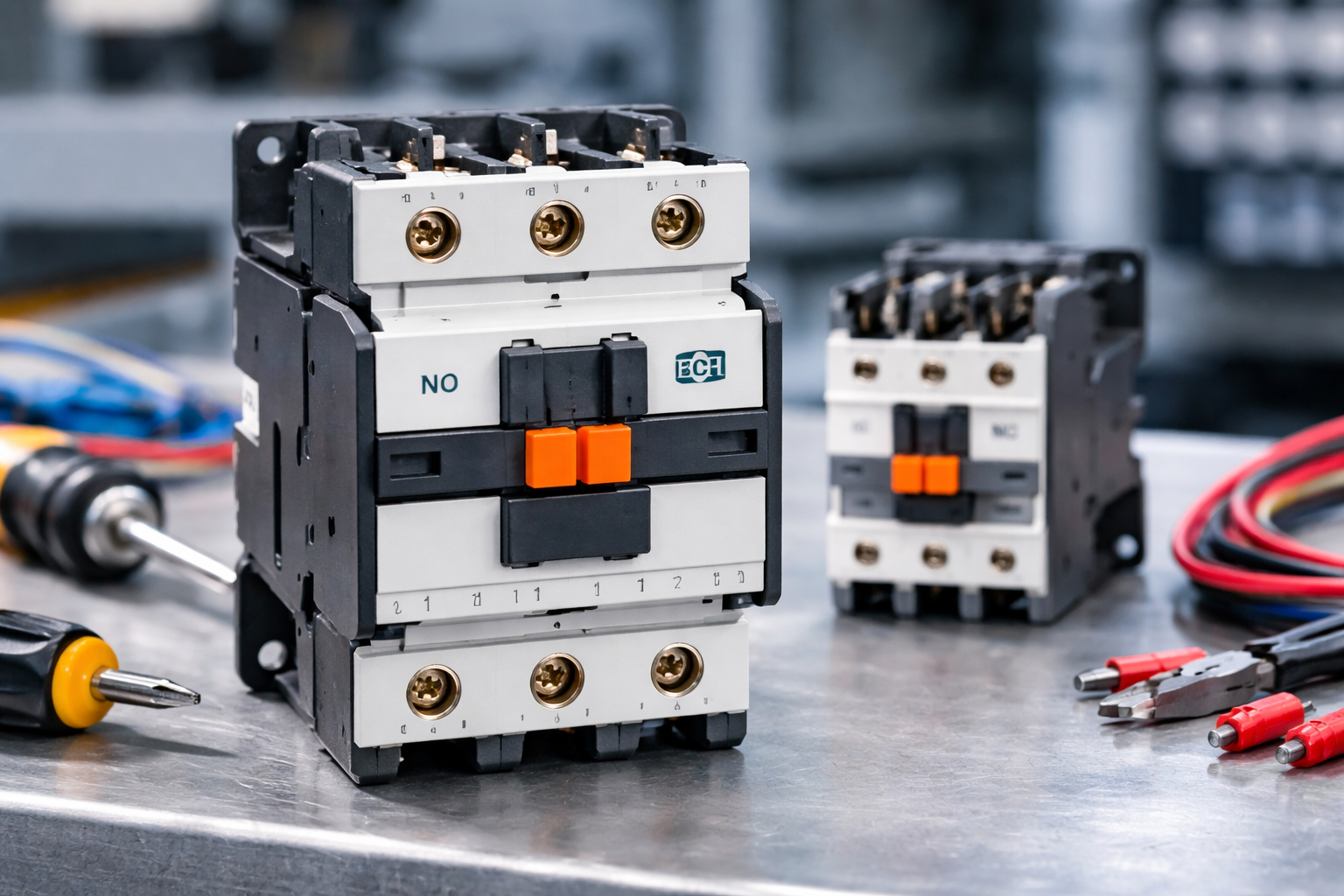
Industrial motors are the backbone of manufacturing, processing, and automation systems. From conveyors and pumps to compressors and heavy machinery, motors power nearly every industrial operation. Ensuring their safe and efficient operation requires reliable control devices—one of the most important being the contactor.
A contactor is a key component in motor control systems, responsible for switching electrical power to motors. However, selecting the right contactor is not a simple decision. It requires careful consideration of electrical ratings, application type, load characteristics, and environmental conditions.
This contactor selection guide provides a detailed understanding of how to choose the right contactor for industrial motor control, helping professionals ensure safety, reliability, and optimal performance.
What Is a Contactor?
A contactor is an electrically controlled switching device used to open or close power circuits. It is widely used in motor control applications to manage the flow of electricity to motors and other high-power loads.
Unlike switches, contactors are designed for:
-
Frequent switching operations
-
High current handling
-
Remote operation via control circuits
-
Integration with automation systems
Contactors are essential in motor starters, control panels, and industrial automation systems.
Why Correct Contactor Selection Is Important
Selecting the wrong contactor can result in:
-
Contact welding or failure
-
Overheating
-
Reduced motor life
-
Frequent maintenance
-
Operational downtime
Correct contactor selection ensures:
-
Reliable motor operation
-
Safe switching under load
-
Longer equipment lifespan
-
Efficient system performance
In industrial environments, proper selection directly impacts productivity and safety.
Key Factors to Consider When Selecting a Contactor
1. Motor Power Rating (kW/HP)
The first step in selecting a contactor is understanding the motor rating.
Contactors are typically rated based on:
-
Motor power (kW or HP)
-
Operating voltage
For example:
-
Small motors → lower-rated contactors
-
Large industrial motors → higher-rated contactors
Always match the contactor rating with the motor’s power requirement.
2. Rated Operational Current (Ie)
The rated operational current (Ie) is the current the contactor can carry under normal operating conditions.
This value depends on:
-
Motor load
-
Supply voltage
-
Duty cycle
Choosing a contactor with insufficient current rating can lead to overheating and premature failure.
Always ensure the contactor can handle the motor’s full load current.
3. Utilization Category (AC-1, AC-3, AC-4)
One of the most critical factors in contactor selection is the utilization category, which defines the type of load and switching conditions.
AC-1 (Resistive Loads)
Used for:
-
Heating elements
-
Lighting circuits
AC-3 (Standard Motor Control)
Used for:
-
Starting and stopping squirrel cage motors
-
Normal industrial motor applications
This is the most commonly used category for motor control.
AC-4 (Severe Duty Applications)
Used for:
-
Frequent starting and stopping
-
Jogging and inching operations
-
Reversing motors
AC-4 applications require contactors with higher durability due to frequent switching.
Selecting the correct utilization category ensures the contactor can handle the operational stress.
4. Coil Voltage
The contactor coil is used to control the switching operation.
Common coil voltages include:
-
24V AC/DC
-
110V AC
-
230V AC
-
415V AC
The coil voltage should match the control circuit voltage used in the system.
Incorrect coil voltage selection can lead to:
-
Failure to operate
-
Coil damage
-
Control system malfunction
5. Number of Poles
Contactors are available with different pole configurations:
-
Single pole – for limited applications
-
Three pole (3P) – for three-phase motors
-
Four pole (4P) – where neutral switching is required
For most industrial motor applications, three-pole contactors are commonly used.
6. Electrical and Mechanical Life
Industrial contactors are subject to frequent switching operations.
Two important parameters are:
-
Electrical life – number of switching cycles under load
-
Mechanical life – number of cycles without load
High-quality contactors offer:
-
Longer operational life
-
Reduced maintenance
-
Better reliability
Selecting a durable contactor is essential for continuous industrial operations.
7. Short Circuit Protection Coordination
Contactors are not designed to handle short-circuit faults directly. They must be used with protective devices such as:
Proper coordination ensures:
-
Safe fault interruption
-
Protection of the contactor and motor
-
System reliability
This coordination is critical in industrial motor control systems.
8. Environmental Conditions
Industrial environments can be harsh, with exposure to:
-
Dust
-
Moisture
-
Heat
-
Vibration
Contactors used in such environments must be:
-
Robust and durable
-
Resistant to environmental stress
-
Suitable for high-temperature operation
Manufacturers like BCH India design contactors suitable for real-world industrial conditions.
9. Switching Frequency
Different applications have different switching requirements.
-
Low-frequency switching → standard contactors
-
High-frequency switching → heavy-duty or specialized contactors
Frequent switching increases wear on contacts, so selecting a contactor with appropriate endurance is essential.
10. Mounting and Panel Compatibility
Contactors should be easy to install and integrate into control panels.
Look for:
-
DIN rail or panel mounting options
-
Compact design
-
Easy wiring access
-
Compatibility with auxiliary components
Ease of installation improves efficiency during panel assembly.
Types of Contactors Used in Motor Control
Direct-On-Line (DOL) Contactors
Used for:
-
Direct motor starting
-
Small to medium motors
Simple and widely used in industrial applications.
Star-Delta Contactors
Used for:
-
Reducing starting current
-
Large motors
These systems use multiple contactors to control motor starting sequence.
Reversing Contactors
Used for:
-
Changing motor direction
-
Conveyor systems
-
Lifting equipment
Require interlocking mechanisms for safe operation.
Capacitor Switching Contactors
Used for:
-
Power factor correction systems
-
Capacitor banks
Designed to handle high inrush currents.
Common Applications of Contactors
Contactors are used in:
-
Motor control centers (MCC panels)
-
Industrial automation systems
-
HVAC systems
-
Pumps and compressors
-
Conveyor systems
-
Manufacturing machinery
In all these applications, reliable switching ensures smooth operation.
Common Mistakes to Avoid in Contactor Selection
Avoid these common errors:
- Selecting based only on motor kW
- Ignoring utilization category
- Choosing incorrect coil voltage
- Not considering switching frequency
- Using low-quality contactors
Proper selection avoids system failures and improves reliability.
How Quality Contactors Improve System Performance
High-quality contactors offer:
-
Reliable switching under load
-
Reduced maintenance requirements
-
Longer service life
-
Improved motor protection
-
Better system efficiency
Choosing a trusted manufacturer ensures consistent performance and safety.
BCH India offers electrical solutions designed for industrial motor control systems. Through https://bchindia.com/, professionals can access product information and technical guidance for selecting the right components.
Future Trends in Motor Control Systems
Industrial motor control is evolving with:
-
Smart automation systems
-
IoT-enabled monitoring
-
Energy-efficient motor control
-
Integration with PLC systems
Contactors continue to play a vital role in these systems, ensuring safe and reliable switching.
Conclusion
Selecting the right contactor is essential for safe and efficient motor control in industrial environments.
When choosing a contactor, consider:
-
Motor power and current rating
-
Utilization category (AC-1, AC-3, AC-4)
-
Coil voltage
-
Environmental conditions
-
Switching frequency
-
Coordination with protection devices
A properly selected contactor ensures:
-
Reliable motor operation
-
Reduced downtime
-
Improved system efficiency
-
Enhanced safety
For detailed product specifications, technical insights, and industrial electrical solutions, professionals can explore https://bchindia.com/.
