
Electrical safety is one of the most important parts of any residential, commercial, or industrial setup. Yet, many electrical failures happen because protective devices are ignored until a major issue occurs. One such critical safety device is the RCCB.
An RCCB works silently in the background, protecting people and equipment from electric shock and leakage current faults. But like any electrical component, it does not last forever.
Many people assume that if the power supply is working normally, the RCCB is functioning properly too. Unfortunately, that is not always true. An old or faulty RCCB may fail to trip during an electrical fault, putting both lives and equipment at risk.
If you are noticing unusual electrical issues or repeated tripping problems, your RCCB may already be showing signs of failure.
This guide explains the most common signs your RCCB needs replacement, why these issues happen, and how replacing a faulty RCCB can improve electrical safety and system reliability.
What Is an RCCB?
An RCCB, or Residual Current Circuit Breaker, is a protective electrical device designed to detect leakage current in an electrical system.
When the RCCB senses an imbalance between the live and neutral current, it quickly disconnects the power supply to prevent:
- Electric shock
- Electrical fires
- Equipment damage
- Leakage current hazards
RCCBs are widely used in:
- Residential buildings
- Commercial facilities
- Industrial plants
- Data centers
- Healthcare facilities
- Manufacturing units
They play a major role in electrical protection systems by improving user safety and reducing accident risks.
Why RCCB Condition Should Never Be Ignored
A damaged or aging RCCB may continue operating without showing immediate failure. However, during an actual leakage fault, it may:
- Fail to trip
- Trip too late
- Cause nuisance tripping
- Create unsafe operating conditions
Ignoring these warning signs can result in severe electrical hazards.
That is why regular inspection and timely RCCB replacement are essential for maintaining electrical system safety.
1. Frequent Nuisance Tripping
One of the earliest signs of RCCB problems is repeated nuisance tripping.
An RCCB is designed to trip when leakage current is detected. However, if it starts tripping repeatedly without any actual fault, the device itself may be deteriorating.
Common Symptoms
- RCCB trips randomly
- Power cuts occur even under normal load
- No visible electrical fault is found
- Tripping frequency increases over time
Possible Causes
While nuisance tripping can sometimes result from wiring issues or appliance leakage, an aging RCCB with worn internal components may also become overly sensitive.
Why Replacement Matters
A faulty RCCB disrupts operations, affects productivity, and creates unnecessary downtime. Replacing it restores stable electrical protection and improves reliability.
2. RCCB Fails to Trip During Testing
Every RCCB comes with a test button.
This button helps verify whether the device is functioning correctly. When pressed, the RCCB should trip immediately.
If the device fails to trip during testing, it is a serious warning sign.
What This Indicates
- Internal mechanism failure
- Contact malfunction
- Reduced sensitivity
- Complete RCCB failure
An RCCB that does not respond during testing may not provide protection during actual leakage faults.
Recommended Action
If the RCCB does not trip during a manual test, replacement should be considered immediately.
3. Delayed Tripping Response
An RCCB must react quickly to leakage current.
Even a slight delay in tripping can increase the risk of electric shock or equipment damage.
If you notice delayed response during testing or fault conditions, the RCCB may be nearing the end of its service life.
Why Fast Response Matters
Electrical leakage faults develop rapidly. Delayed interruption allows dangerous current flow to continue longer than safe limits.
Common Reasons for Delay
- Aging internal components
- Contact wear
- Dust accumulation
- Mechanical deterioration
A slow RCCB should never be ignored, especially in industrial and high-load applications.
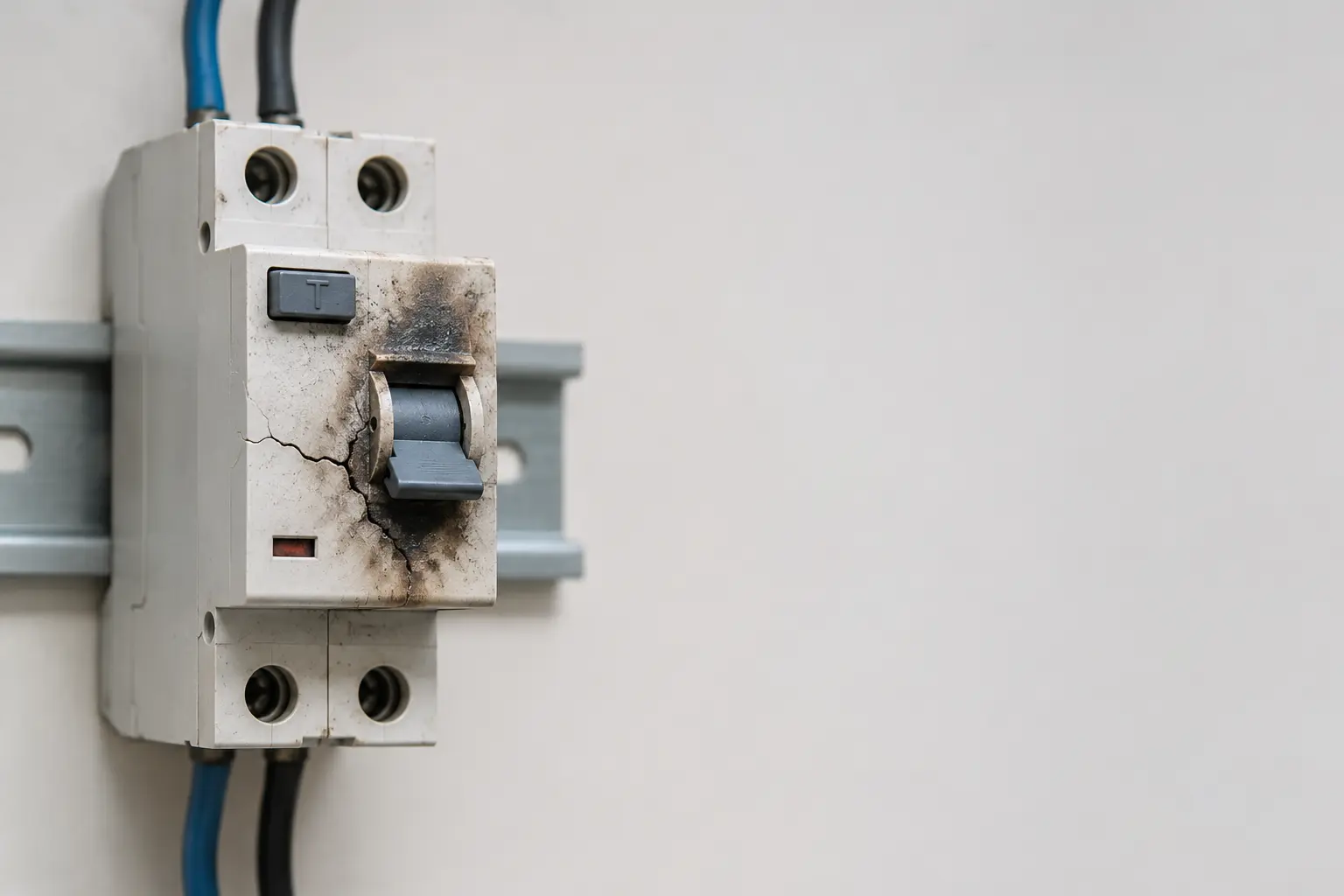
4. Visible Burn Marks or Physical Damage
Physical inspection often reveals early signs of RCCB deterioration.
Check for:
- Burn marks
- Cracks in housing
- Discoloration
- Melted terminals
- Loose connections
- Corrosion
These signs usually indicate overheating, excessive current stress, or internal electrical failure.
Why It Is Dangerous
A damaged RCCB may not isolate electrical faults effectively. In some cases, overheating can even increase fire risks.
When Replacement Becomes Necessary
Any visible physical damage should be treated as a strong indication that the RCCB requires immediate replacement.
5. Burning Smell Near the Distribution Board
A burning smell coming from the electrical panel should never be ignored.
Faulty RCCBs can overheat because of worn contacts, loose terminal connections, or internal electrical damage.
Warning Signs Include
- Plastic burning smell
- Excessive heat near the RCCB
- Smoke marks around terminals
- Hot distribution board surfaces
Immediate Action Required
Switch off the power supply and have the electrical system inspected by a qualified professional.
Continuing to operate a faulty RCCB may create serious fire and safety hazards.
6. Old RCCB Installed for Many Years
Like all electrical protection devices, RCCBs have a practical service life.
Over time, environmental conditions, electrical load fluctuations, dust, humidity, and repeated operations affect performance.
Factors That Reduce RCCB Life
- High humidity
- Industrial contamination
- Frequent tripping
- Poor maintenance
- Voltage fluctuations
If the RCCB has been installed for many years without inspection or testing, replacement may be necessary even if obvious faults are not visible.
Why Aging Matters
An old RCCB may appear functional but fail during a real leakage current event.
8. Electrical Shock from Appliances or Equipment
One of the most serious warning signs is experiencing mild electrical shock from appliances, switches, or machinery.
This may indicate:
- Leakage current problems
- Grounding issues
- RCCB malfunction
A properly functioning RCCB should disconnect the supply immediately during leakage conditions.
Do Not Ignore Minor Shocks
Even small electrical shocks can signal a major safety risk.
Immediate inspection and RCCB evaluation are strongly recommended.
9. Increased Electrical Load in the System
Many older RCCBs were installed when electrical demand was much lower.
Modern facilities now use:
- More automation systems
- Heavy machinery
- Air conditioning systems
- Advanced appliances
- High-power equipment
An outdated RCCB may no longer match the electrical requirements of the system.
Signs of Overloaded Protection Devices
- Frequent tripping under heavy load
- Overheating
- Reduced stability
- Inconsistent performance
Upgrading to a suitable RCCB improves electrical protection and operational reliability.
Why Timely RCCB Replacement Is Important
Delaying RCCB replacement can lead to:
- Increased electric shock risk
- Equipment damage
- Electrical fires
- Production downtime
- Unsafe working conditions
Replacing a faulty RCCB improves:
- Electrical safety
- System reliability
- Fault protection
- Operational continuity
- Compliance with safety standards
A properly functioning RCCB acts as one of the most critical layers of electrical protection.
How Often Should RCCBs Be Tested?
Routine testing helps identify RCCB problems before major failures occur.
Recommended Practice
Most experts recommend pressing the RCCB test button periodically to verify operation.
Industrial and commercial systems may also require professional inspection and electrical testing as part of preventive maintenance programs.
What Regular Testing Helps Detect
- Reduced sensitivity
- Mechanical sticking
- Delayed tripping
- Internal damage
Regular maintenance improves safety and extends electrical system reliability.
How to Choose the Right Replacement RCCB
If your RCCB shows signs of failure, selecting the correct replacement is important.
Factors to consider include:
- Current rating
- Sensitivity rating
- Number of poles
- Application type
- Short-circuit protection compatibility
- Environmental conditions
Using the wrong RCCB may reduce system protection effectiveness.
Professional consultation is always recommended for industrial and commercial applications.
Common Applications Where RCCBs Are Essential
RCCBs are used across multiple industries and facilities because of their role in electrical safety.
Residential Buildings
Protect users from electric shock and leakage current hazards.
Commercial Facilities
Support safe operation of lighting, HVAC systems, and office equipment.
Industrial Plants
Provide leakage protection for machinery and automation systems.
Healthcare Facilities
Help maintain electrical safety in sensitive environments.
Data Centers
Protect critical electrical infrastructure and electronic systems.
Final Thoughts
An RCCB is one of the most important electrical safety devices in any installation. However, many people overlook warning signs until a serious electrical issue occurs.
Frequent tripping, failed testing, delayed response, overheating, physical damage, and electrical shocks are all strong indicators that your RCCB may need replacement.
Ignoring these signs can compromise both safety and equipment reliability.
Regular testing, proper maintenance, and timely RCCB replacement help ensure better protection against leakage current faults and electrical hazards.
BCH Electric Limited electrical protection solutions are designed to support safe, reliable, and efficient power distribution across residential, commercial, and industrial applications.
