
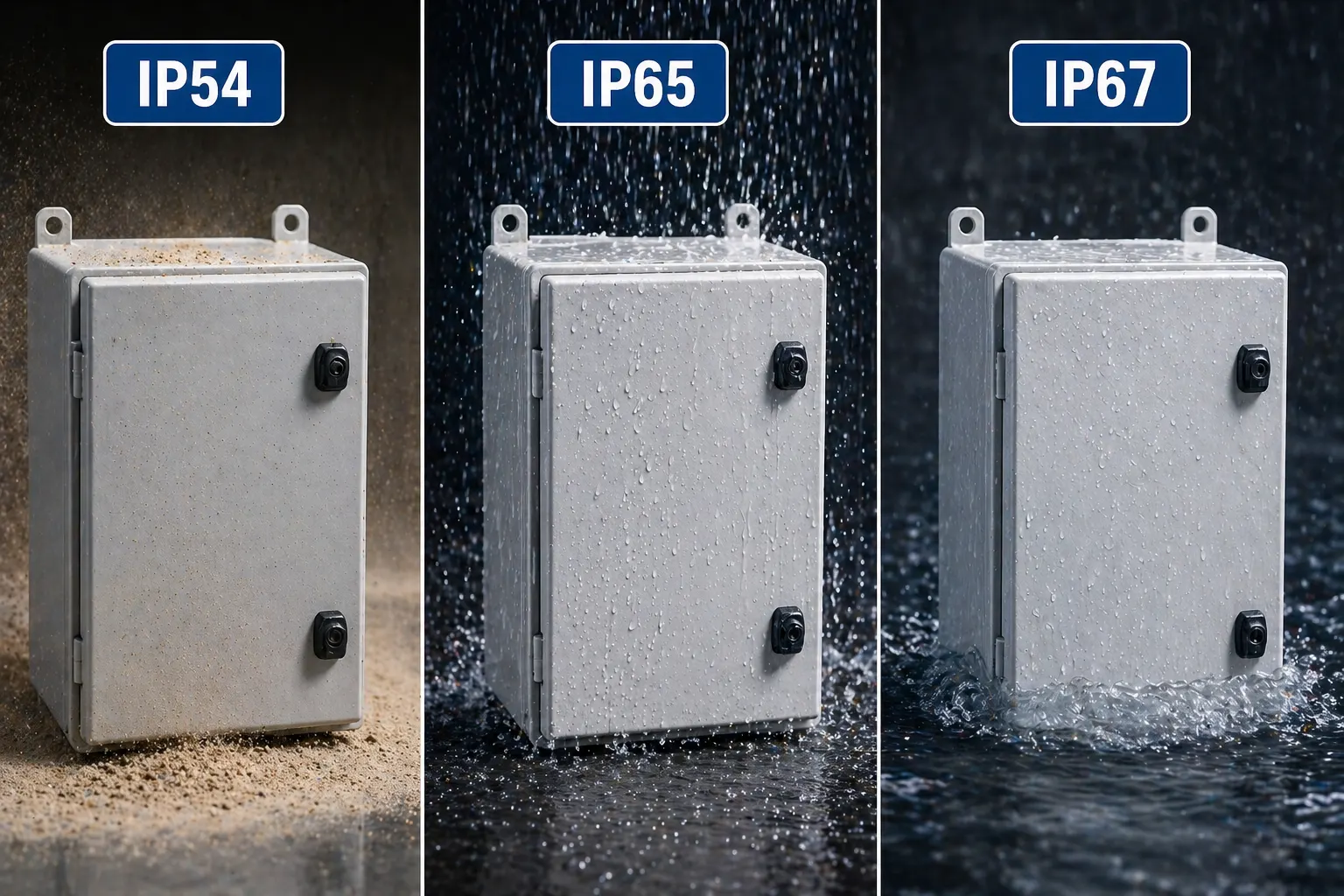
Electrical enclosures are designed to protect critical electrical and electronic components from dust, moisture, accidental contact, and harsh environmental conditions. Whether installed in industrial plants, outdoor utility stations, manufacturing facilities, or commercial buildings, the right enclosure helps ensure safety, performance, and equipment longevity.
One of the most important factors when selecting an enclosure is its IP rating. Terms like IP54, IP65, and IP67 are commonly used in the electrical industry, but many buyers and facility managers are unsure what these ratings actually mean.
In this guide, we will break down what IP ratings are, how they work, and the differences between IP54, IP65, and IP67 electrical enclosures. We will also look at how to choose the right protection level for your application.
What Is an IP Rating?
IP stands for Ingress Protection. An IP rating is an internationally recognized standard that defines how effectively an enclosure protects internal components against the intrusion of solid objects and liquids.
The rating system is defined under the IEC 60529 standard and is widely used for electrical enclosures, control panels, junction boxes, industrial cabinets, and outdoor electrical equipment.
An IP rating is written in the following format:
IPXX
- The first digit represents protection against solid particles such as dust, dirt, or accidental contact.
- The second digit represents protection against water ingress.
For example, in an IP65 enclosure:
- 6 = Dust-tight protection
- 5 = Protection against water jets
Understanding these numbers helps engineers, contractors, and procurement teams select the right enclosure for specific operating conditions.
Why IP Ratings Matter in Electrical Enclosures
Choosing the correct IP-rated enclosure is essential for both safety and operational reliability. If an enclosure does not provide sufficient protection, moisture, dust, or contaminants can enter the system and damage sensitive electrical components.
A properly rated enclosure helps:
- Protect electrical equipment from dust and water damage
- Reduce equipment failure and downtime
- Improve workplace safety
- Extend the lifespan of electrical systems
- Ensure compliance with industrial safety standards
- Maintain reliable performance in harsh environments
Industries such as manufacturing, oil and gas, food processing, renewable energy, pharmaceuticals, and infrastructure projects often require high-performance industrial electrical enclosures with reliable ingress protection.
Understanding the First Digit: Solid Particle Protection
The first number in an IP rating indicates the level of protection against solid objects and dust.
|
First Digit |
Protection Level |
|
0 |
No protection |
|
1-4 |
Protection against larger objects and accidental contact |
|
5 |
Dust protected (limited dust ingress allowed) |
| 6 |
Dust-tight (complete protection against dust) |
For industrial electrical enclosures, ratings of 5 and 6 are commonly preferred because dust accumulation can affect electrical performance and create maintenance issues.
Understanding the Second Digit: Water Protection
The second number indicates the enclosure’s resistance to water ingress.
|
Second Digit |
Water Protection Level |
|
0 |
No protection |
|
1-4 |
Protection against dripping or splashing water |
|
5 |
Protection against water jets |
|
6 |
Protection against powerful water jets |
|
7 |
Protection against temporary immersion in water |
| 8 |
Protection against continuous immersion |
The required level depends on where the enclosure will be installed and how much exposure to moisture or water is expected.
What Is an IP54 Enclosure?
An IP54 electrical enclosure provides:
- Protection against limited dust ingress
- Protection against water splashes from any direction
What Does IP54 Mean?
- 5 = Dust-protected enclosure
- 4 = Protected against water splashes
While small amounts of dust may enter, not enough can penetrate to interfere with the operation of the equipment.
Common Applications of IP54 Enclosures
IP54-rated enclosures are commonly used in:
- Indoor industrial environments
- Commercial electrical systems
- Control panels in relatively clean environments
- Factory automation systems
- Electrical distribution boards
These enclosures are suitable for locations where occasional dust and water splashes may occur but where direct water exposure is limited.
Advantages of IP54 Enclosures
- Cost-effective protection for indoor applications
- Suitable for moderate industrial environments
- Helps protect against accidental contact and contamination
- Ideal for controlled environments with limited moisture exposure
However, IP54 may not be sufficient for outdoor installations or environments exposed to heavy rain, washdowns, or high-pressure cleaning.
What Is an IP65 Enclosure?
An IP65 enclosure offers a significantly higher level of protection.
What Does IP65 Mean?
- 6 = Completely dust-tight
- 5 = Protected against low-pressure water jets from any direction
This means the enclosure prevents dust from entering completely and can withstand exposure to water jets.
Common Applications of IP65 Electrical Enclosures
IP65-rated electrical enclosures are widely used in:
- Outdoor electrical installations
- Industrial manufacturing plants
- Telecommunications equipment
- Solar power systems
- Transportation infrastructure
- Dusty industrial environments
These enclosures are especially valuable in environments where airborne dust, dirt, and moisture are common.
Advantages of IP65 Enclosures
- Excellent dust protection
- Suitable for outdoor applications
- Resistant to water jets and rain exposure
- Reliable performance in harsh industrial environments
- Reduced maintenance and equipment failure risks
Because of their versatility and durability, IP65 industrial enclosures are among the most commonly used protection ratings across industries.
What Is an IP67 Enclosure?
An IP67 enclosure provides advanced protection against both dust and water.
What Does IP67 Mean?
- 6 = Dust-tight protection
- 7 = Protection against temporary immersion in water
An IP67 enclosure can typically withstand temporary immersion in water up to 1 meter deep for up to 30 minutes, depending on manufacturer specifications.
Common Applications of IP67 Enclosures
IP67-rated enclosures are often used in:
- Outdoor industrial systems
- Marine applications
- Underground electrical installations
- Water treatment facilities
- Harsh environmental conditions
- Remote monitoring systems
These enclosures are ideal where equipment may be exposed to flooding, heavy rain, or temporary immersion.
Advantages of IP67 Enclosures
- Complete dust protection
- High resistance to water ingress
- Suitable for challenging outdoor environments
- Improved equipment reliability in wet conditions
- Enhanced protection for sensitive electronics
Although IP67 offers stronger water resistance, it may not always be necessary for every application. Choosing a higher IP rating than required can increase costs unnecessarily.
IP54 vs IP65 vs IP67: Key Differences
Here is a quick comparison of the three enclosure ratings.
| IP Rating | Dust Protection | Water Protection | Typical Use |
| IP54 | Dust protected | Splash resistant | Indoor industrial and commercial environments |
| IP65 | Dust tight | Resistant to water jets | Outdoor and dusty industrial environments |
| IP67 | Dust tight | Temporary immersion protection | Harsh outdoor and wet environments |
The right choice depends on your installation environment, exposure conditions, and operational requirements.
How to Choose the Right IP Rating for Your Electrical Enclosure
Selecting the correct enclosure protection rating requires careful evaluation of the operating environment.
1. Assess Environmental Conditions
Consider whether the enclosure will be installed indoors or outdoors. Outdoor applications usually require stronger protection against rain, dust, humidity, and temperature changes.
2. Evaluate Dust Exposure
Manufacturing facilities, cement plants, and processing industries often generate airborne dust. In such environments, dust-tight enclosures like IP65 or IP67 are often recommended.
3. Consider Water Exposure
Will the enclosure face water splashes, hose-down cleaning, heavy rain, or immersion risks? The answer will help determine the appropriate water protection level.
4. Understand Industry Requirements
Different industries may require specific enclosure standards for safety and compliance.
For example:
- Food processing facilities may require washdown-resistant enclosures
- Outdoor telecom installations often require weatherproof enclosures
- Marine environments may need high corrosion resistance and waterproof protection
5. Balance Protection and Cost
Higher IP-rated enclosures generally cost more due to advanced sealing and construction requirements. It is important to choose a rating that matches your operational needs without overengineering the solution.
Additional Factors Beyond IP Ratings
While IP ratings are important, they are not the only factor when selecting electrical enclosures.
You should also consider:
- Material type (mild steel, stainless steel, aluminum, polycarbonate)
- Corrosion resistance
- UV resistance for outdoor applications
- Ventilation requirements
- Thermal management
- Size and mounting configuration
- Compliance with industry certifications
A well-designed enclosure combines the right ingress protection with durability and application-specific performance.
The Role of Quality Manufacturing in Enclosure Performance
Even a high IP rating may not deliver reliable protection if the enclosure is poorly designed or manufactured.
Factors such as gasket quality, sealing integrity, locking mechanisms, and material construction all influence long-term performance.
High-quality electrical enclosure manufacturers focus on precision engineering, robust testing, and reliable sealing systems to ensure consistent protection in demanding environments.
Conclusion
Understanding IP ratings is essential when selecting electrical enclosures for industrial, commercial, or outdoor applications.
- IP54 enclosures are suitable for indoor environments with limited dust and water exposure.
- IP65 enclosures provide dust-tight protection and resistance against water jets, making them ideal for many industrial and outdoor applications.
- IP67 enclosures offer advanced protection against temporary water immersion and harsh environmental conditions.
Choosing the correct IP-rated enclosure helps protect valuable electrical equipment, improve operational reliability, and reduce maintenance risks.
At BCH Electric Limited, we manufacture high-performance electrical enclosure solutions that are designed to meet demanding industrial requirements while ensuring durability, safety, and reliable protection across a wide range of applications.
By understanding enclosure protection ratings and matching them to your environment, you can make informed decisions that support long-term system performance and operational efficiency.
