
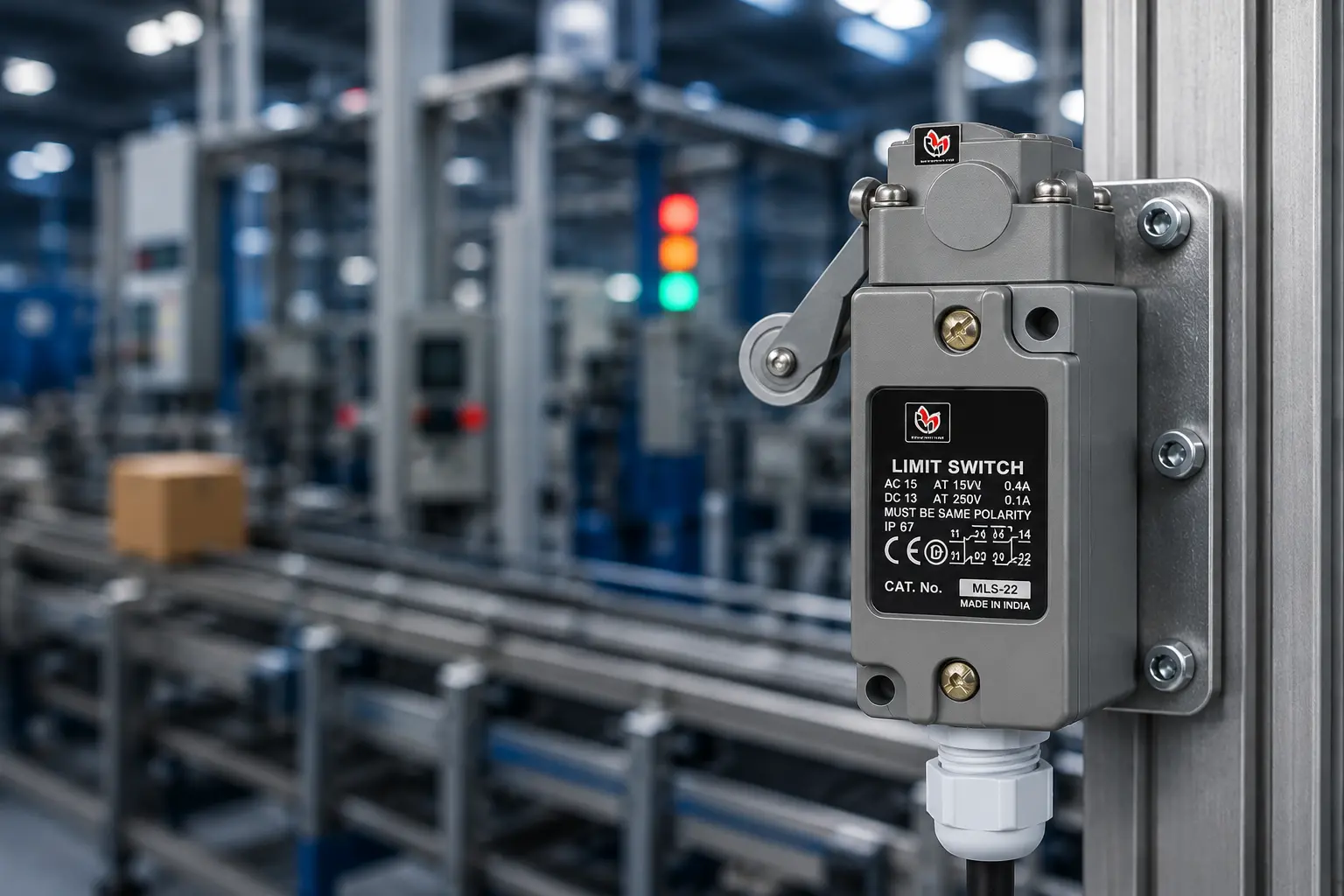
Industrial automation depends on precision, safety, and reliable machine control. A small failure in sensing or position detection can stop an entire production line, increase maintenance costs, or create safety risks for operators. That is why choosing the right industrial limit switch is not just about buying another component. It is about improving operational reliability and reducing downtime.
Many industries still struggle with premature switch failures, inconsistent machine feedback, and poor performance in harsh environments. In most cases, the problem is not the machine itself. It is the use of a limit switch that does not match the application requirements.
This guide explains the top features to look for in industrial limit switches so you can choose the right solution for your automation system, material handling setup, or industrial machinery.
What Is an Industrial Limit Switch?
An industrial limit switch is an electromechanical device used to detect the presence, movement, or position of an object. It operates when an actuator comes into contact with a moving machine part or object.
These switches are widely used in:
- Conveyor systems
- Packaging machinery
- Cranes and hoists
- Automotive production lines
- Material handling systems
- Heavy industrial equipment
- Process automation systems
A properly selected limit switch improves machine safety, enhances operational efficiency, and supports accurate motion control.
Why Choosing the Right Limit Switch Matters
Not all industrial environments are the same. A switch that works well in a clean indoor facility may fail quickly in a dusty cement plant or a high-vibration manufacturing unit.
When the wrong limit switch is used, industries often face:
- Frequent equipment downtime
- Inaccurate machine positioning
- Electrical failures
- Increased maintenance costs
- Reduced equipment lifespan
- Production delays
Selecting a high-quality industrial limit switch with the right features helps prevent these issues while improving system reliability.
1. Durability and Mechanical Life
One of the most important features to evaluate is durability.
Industrial limit switches operate repeatedly during machine cycles. In high-speed automation systems, a switch may activate thousands or even millions of times over its lifetime.
Look for switches designed with:
- High mechanical endurance
- Heavy-duty housing
- Wear-resistant actuators
- Industrial-grade internal components
A robust limit switch reduces replacement frequency and supports continuous operation in demanding industrial conditions.
For industries with heavy machinery or repetitive motion systems, mechanical life rating becomes a critical factor.
Why It Matters
A durable switch minimizes maintenance interruptions and lowers long-term operational costs.
2. Environmental Protection Rating
Industrial environments are rarely clean or controlled. Dust, oil, moisture, chemicals, and extreme temperatures can affect switch performance.
This is why IP ratings and environmental protection are essential.
When evaluating industrial limit switches, check whether they offer:
- Dust-proof construction
- Water resistance
- Corrosion-resistant housing
- Oil-resistant sealing
- Temperature tolerance
For harsh environments, IP65, IP66, or higher-rated switches are commonly preferred.
Applications That Require High Protection
- Steel plants
- Mining operations
- Chemical industries
- Food processing units
- Outdoor automation systems
A properly sealed switch helps maintain reliable performance even under extreme industrial conditions.
3. Accurate Position Detection
Precision is critical in industrial automation.
The main purpose of a limit switch is to provide accurate feedback regarding machine movement or object positioning. Poor detection accuracy can result in production errors, equipment collisions, or process inefficiencies.
High-quality industrial limit switches should provide:
- Consistent actuation points
- Reliable switching accuracy
- Stable repeatability
- Fast response time
Accurate position sensing is especially important in CNC machines, robotic systems, and automated assembly lines.
Common Problems with Low-Quality Switches
Inferior switches may suffer from:
- Delayed response
- Contact bounce
- Inconsistent triggering
- Premature wear
These issues directly impact productivity and machine reliability.
4. Suitable Actuator Type
Different industrial applications require different actuator styles.
The actuator is the part of the limit switch that physically interacts with the moving object. Choosing the correct actuator improves operational efficiency and extends switch life.
Common actuator types include:
Roller Lever Actuators
Suitable for conveyor systems and applications with moving parts.
Plunger Actuators
Used where direct linear movement is involved.
Rotary Lever Actuators
Ideal for angular or rotating machine motion.
Whisker or Spring Rod Actuators
Helpful for delicate or irregular object detection.
The operating environment and machine movement should determine actuator selection.
5. Electrical Rating Compatibility
One of the most overlooked factors is electrical compatibility.
Industrial limit switches must match the voltage and current requirements of the system. Using an incompatible switch can lead to overheating, contact damage, or system failure.
Check for:
- Voltage rating
- Current carrying capacity
- AC or DC compatibility
- Contact configuration
- Load handling capability
For industrial automation systems, reliable electrical performance ensures uninterrupted machine operation.
Tip
Always consider both normal operating load and surge conditions before finalizing switch selection.
6. Contact Reliability
Reliable electrical contacts are essential for consistent machine control.
Industrial environments often expose switches to vibration, electrical noise, and repetitive cycling. Poor contact quality can result in false signals or intermittent machine failures.
A high-quality industrial limit switch should offer:
- Stable contact performance
- Low contact resistance
- High switching reliability
- Arc-resistant contact materials
Reliable contacts help improve safety interlocks, machine automation, and process control.
7. Compact and Flexible Design
Modern industrial machinery often has limited installation space.
Compact limit switches make integration easier without compromising performance. Flexible mounting options also help simplify installation in complex automation setups.
Look for features such as:
- Compact housing
- Easy mounting configurations
- Adjustable actuator positions
- Modular designs
Flexible designs support easier retrofitting and machine upgrades.
8. High Resistance to Shock and Vibration
Industrial machinery creates constant vibration and mechanical shock.
In applications such as cranes, presses, heavy equipment, and material handling systems, switches must maintain performance under intense mechanical stress.
A vibration-resistant industrial limit switch helps prevent:
- False triggering
- Mechanical damage
- Contact failure
- Signal interruption
Shock-resistant construction improves operational stability in demanding environments.
9. Safety and Compliance Standards
Safety is a major concern in industrial automation.
Limit switches are often integrated into machine safety systems to prevent unsafe movement or accidental machine operation.
Choose switches that comply with recognized industrial standards and certifications.
Common considerations include:
- Industrial safety compliance
- Reliable emergency stop integration
- Safe switching performance
- International quality standards
Using certified industrial components improves system reliability and supports workplace safety requirements.
10. Easy Maintenance and Long Service Life
Maintenance teams prefer components that are easy to inspect and replace.
Industrial limit switches with accessible designs simplify troubleshooting and reduce service downtime.
Features that improve maintainability include:
- Replaceable actuator heads
- Easy wiring access
- Durable terminal connections
- Long operational life
A long-lasting switch reduces total ownership costs while improving overall production efficiency.
How to Choose the Right Industrial Limit Switch
Choosing the right switch starts with understanding your application.
Before selecting a limit switch, evaluate:
- Environmental conditions
- Machine movement type
- Operating frequency
- Electrical requirements
- Mounting space availability
- Required safety level
- Load conditions
A well-matched switch improves reliability while reducing unexpected failures.
Common Applications of Industrial Limit Switches
Industrial limit switches are widely used across multiple sectors because of their reliability and versatility.
Manufacturing Plants
Used for machine position detection, automation control, and safety interlocking.
Conveyor Systems
Help detect object movement and improve material handling efficiency.
Packaging Machinery
Support synchronized machine operation and accurate product handling.
Cranes and Hoists
Prevent overtravel conditions and improve operational safety.
Automotive Industry
Enable precise control in robotic assembly lines and automated production systems.
Heavy Industrial Equipment
Provide reliable operation in demanding environments with vibration and dust exposure.
Signs You May Need a Better Limit Switch
If your current automation system experiences frequent switch-related problems, it may be time to upgrade.
Common warning signs include:
- Frequent machine stoppages
- Delayed switch response
- Physical damage to actuators
- Moisture-related failures
- Inconsistent machine feedback
- Excessive maintenance requirements
Replacing low-quality switches with industrial-grade solutions can significantly improve operational performance.
Final Thoughts
Industrial limit switches may appear to be small components, but their role in automation and machine safety is critical. The right switch improves equipment reliability, minimizes downtime, and supports efficient industrial operations.
When selecting an industrial limit switch, focus on features such as durability, environmental protection, contact reliability, actuator suitability, and electrical compatibility. A well-designed switch not only improves machine performance but also helps reduce long-term maintenance costs.
Industries that invest in high-quality automation components benefit from smoother production, improved safety, and better operational efficiency.
At, BCH Electric Limited industrial automation solutions are designed to meet the demands of modern industries with reliability, precision, and long-term performance in mind.
