
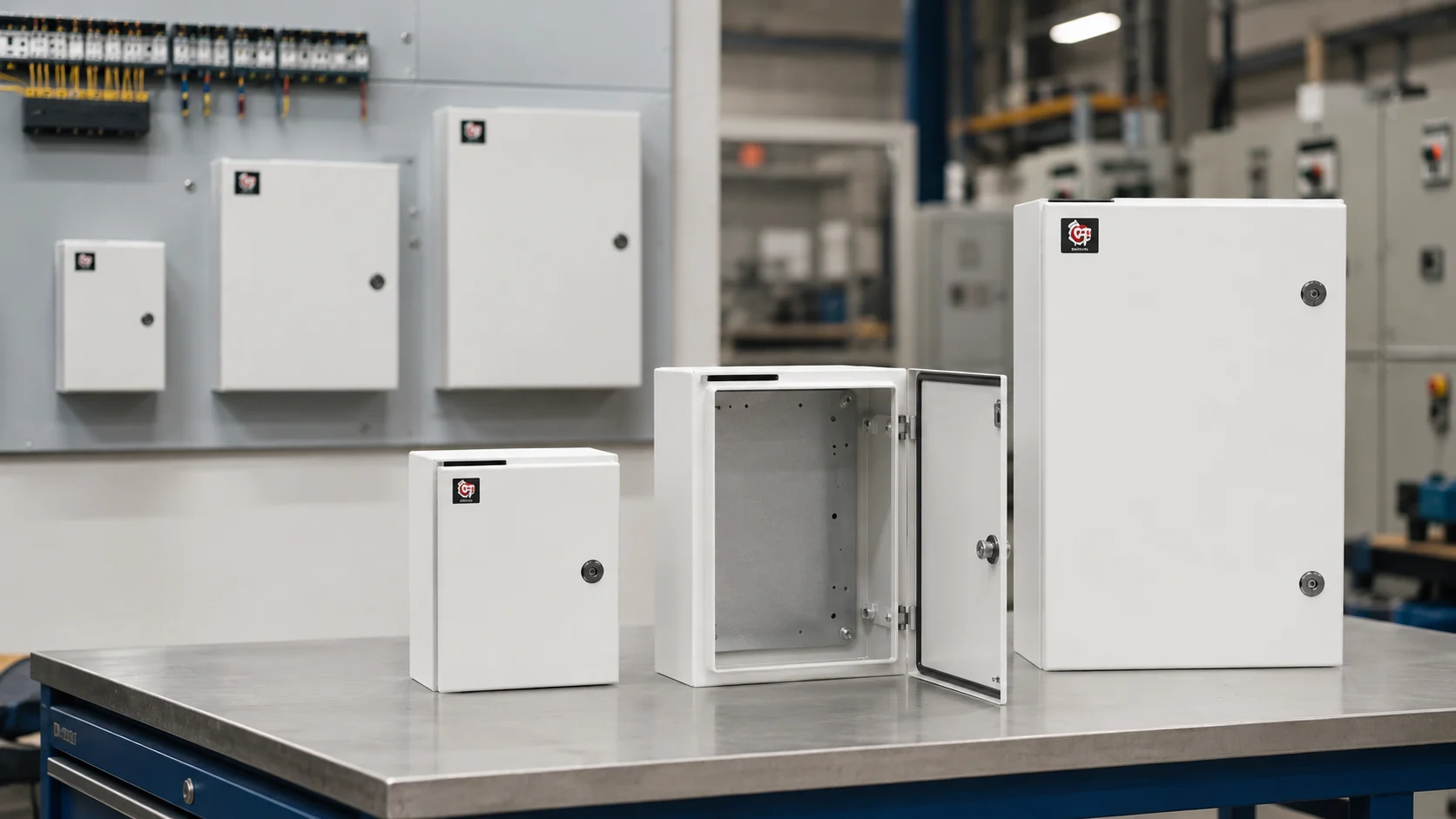
Quick answer
An enclosure should be sized around the actual electrical layout, not only the outside dimensions shown in a catalogue. A good enclosure selection should consider component space, wiring bend radius, cable entry, heat dissipation, IP rating, IK rating, material, maintenance access and future expansion.
For industrial panels, the enclosure protects the equipment and the people working around it. If it is too small, poorly ventilated or wrongly rated for the site, the panel may face overheating, difficult wiring, condensation, corrosion, nuisance trips and early component failure.
BCH offers industrial electrical enclosures for panel building, machine control, indoor installations and outdoor protection requirements. The right selection begins with the duty, environment and panel layout.
What is an electrical enclosure?
An electrical enclosure is a protective housing used to hold electrical and control components. It protects components from dust, water, accidental contact, impact, corrosion and site conditions. It also helps organize wiring, terminals, switching devices and control accessories inside a panel.
In real installations, an enclosure is not just a metal or non-metallic box. It is part of the electrical system. The enclosure affects component temperature, wiring access, service time, safety, protection rating and future modification options.
That is why enclosure sizing should start with the actual panel design. The outer dimensions matter, but usable mounting space, cable entry, gland layout, ventilation and access space matter just as much.
Why enclosure sizing matters in industrial panels
A panel can look correct on paper and still create problems on site if the enclosure is undersized. Electrical components need space for safe mounting, heat dissipation, cable routing and maintenance. When these points are ignored, the panel becomes difficult to build and harder to service.
Poor enclosure sizing can lead to:
- Heat buildup inside the panel
- Tight wiring and poor bend radius
- Difficult cable termination
- Crowded components
- Limited maintenance access
- Higher risk of wiring mistakes
- Condensation or corrosion
- Lack of space for future expansion
- Rework during commissioning
If you are still comparing enclosure types, BCH’s guide on how to choose the right electrical enclosure for your application can support the selection process before moving into product comparison.
Start with the components inside the enclosure
The first sizing step is to list every component that will sit inside the enclosure. This includes switching devices, control devices, terminals, relays, meters, drives, power supplies, cable ducts, busbars and accessories.
Do not size the enclosure only around the biggest device. The final layout has to account for the full system.
Before selecting the enclosure, note:
- Number and size of electrical components
- Mounting plate requirement
- Cable duct space
- Terminal block space
- Control wiring space
- Power wiring space
- Earthing arrangement
- Door-mounted devices
- Nameplates, meters or indicators
- Space for testing and replacement
- Spare space for future additions
A layout with enough component space is easier to wire, inspect and maintain. It also reduces the chance of heat concentration around tightly packed devices.
Keep enough wiring space
Wiring space is one of the most common reasons an enclosure becomes difficult to use. Electrical drawings may show a clean layout, but actual cables need bend radius, gland space, duct routing and termination clearance.
Power cables, control cables and communication cables should not be forced into the same cramped path. Poor routing can make troubleshooting harder and may increase electrical noise in sensitive circuits.
Check these points before finalizing the enclosure size:
- Cable entry direction
- Gland plate space
- Cable bend radius
- Terminal access
- Separation between power and control wiring
- Space for cable ducts
- Space near door-mounted devices
- Space for future cable additions
If technicians need to struggle to terminate or trace wires, the enclosure is probably too tight for the application.
Allow space for future expansion
Many panels change after installation. A new relay, terminal, meter, sensor input, communication device or protection accessory may be added later. If the enclosure was selected with no spare space, even a small change can become expensive.
Future expansion does not mean oversizing without reason. It means leaving practical spare space based on the project type.
For most industrial panels, consider spare space for:
- Additional terminals
- Control relays
- Communication modules
- Extra cable entries
- Future meters or indicators
- Small control power supplies
- Additional protective devices
- Service labels and documentation pockets
A slightly better planned enclosure can save site teams from rework during modification or maintenance.
Check the IP rating for the environment
The IP rating explains the level of protection against dust and water ingress. It should be selected according to the installation environment, not copied from another project.
An indoor control panel in a clean room does not need the same protection as an outdoor feeder pillar, pump area, dusty plant zone or washdown location. A higher IP rating can help in harsh environments, but it also affects ventilation and heat dissipation.
For a deeper explanation of IP codes, you can use BCH’s guide on IP ratings in electrical enclosures.
Choose the right material
Material choice affects corrosion resistance, strength, weight, cost and long-term performance. The best material depends on the site environment and the equipment inside the panel.
Common choices include painted metal enclosures, stainless steel enclosures and non-metallic enclosures. Each has a different fit.
Painted metal enclosures are often used in general industrial panels where the environment is controlled. Stainless steel enclosures may be more suitable where corrosion, moisture or hygiene conditions matter. A non-metallic enclosure can be relevant in selected applications where corrosion resistance, weight or insulation characteristics are important.
Material should not be treated as a cosmetic choice. It directly affects enclosure life and maintenance risk.
Plan for heat dissipation
Heat is one of the biggest reasons electrical panels become unreliable. Components generate heat during normal operation. If that heat is trapped inside the enclosure, component life can reduce and nuisance trips may increase.
Heat planning should include:
- Component heat loss
- Ambient temperature
- Ventilation path
- Panel location
- Sun exposure for outdoor panels
- Internal air circulation
- Cooling requirement
- Spacing between heat-generating devices
- Effect of high IP rating on airflow
A tightly sealed enclosure may protect against dust and water, but it can also trap heat. The design needs balance. BCH’s article on electrical enclosure ventilation and heat management is a useful supporting resource for this topic.
If the panel has already faced heating issues, BCH’s guide on how to prevent overheating in electrical enclosures can help maintenance teams review likely causes.
Decide between wall-mounted and floor-mounted enclosures
The mounting format depends on panel size, component weight, available space and service access.
Wall-mounted enclosures are usually suitable for smaller control panels, distribution points and local machine interfaces. They save floor space and are easier to place near equipment.
Floor-mounted enclosures are better suited for larger panels, heavier components, multiple feeders, complex wiring or applications where technicians need more service access.
The decision should consider more than dimensions. Think about cable entry, door swing, working clearance, foundation, maintenance access and whether the panel may expand later.
When does an outdoor enclosure need extra attention?
Outdoor enclosures face more variables than indoor panels. Rain, dust, UV exposure, heat, humidity, wind, insects and temperature variation can all affect enclosure performance.
Outdoor selection should review:
- IP rating
- Material and coating
- Gasket quality
- Drainage and condensation risk
- Sun exposure
- Ventilation or cooling
- Cable gland sealing
- Mounting height
- Service access
- Impact exposure
For outdoor applications, BCH’s article on waterproof enclosures for outdoor applications gives useful context before selecting the product family.
Product families to review
Once the sizing logic is clear, the product comparison becomes easier. BCH’s industrial electrical enclosures page is the main category path for enclosure selection.
For specific requirements, buyers can also review Bhartia Enclosure 2.0 and IP-55 Bhartia Enclosure depending on the panel design, protection requirement and installation environment.
The product page should be used after the site duty and panel layout are clear. That keeps the conversation practical and avoids selecting an enclosure only because the size looks close.
Common enclosure sizing mistakes
Most enclosure problems are visible early if the design is reviewed properly. The issue is that many teams approve enclosure size before checking the real wiring and maintenance conditions.
Common mistakes include:
- Selecting only by outer dimensions
- Ignoring usable mounting depth
- Underestimating cable bend radius
- Leaving no spare space for future expansion
- Choosing the wrong IP rating
- Ignoring IK rating where impact is possible
- Using the wrong material for the environment
- Not planning heat dissipation
- Placing glands without checking cable routing
- Forgetting door-mounted device clearance
- Not checking technician access
- Treating indoor and outdoor sites the same
These mistakes create rework during panel building, testing, commissioning or maintenance.
Enclosure sizing checklist
Use this checklist before final selection:
| Checkpoint | What to verify | Why it matters |
|---|---|---|
| Component layout | All devices, terminals, ducts and accessories fit with working space | Prevents crowding and difficult maintenance |
| Wiring space | Cable routing, bend radius and termination access are realistic | Reduces wiring stress and service delays |
| Future expansion | Spare space is available for likely additions | Avoids rework during upgrades |
| IP rating | Dust and water protection match the site | Protects equipment from ingress |
| IK rating | Impact protection matches the installation area | Reduces damage risk |
| Material | Enclosure material suits corrosion, moisture and site exposure | Improves service life |
| Heat management | Heat dissipation, ventilation and ambient temperature are checked | Protects components from overheating |
| Cable entry | Gland plate, entry direction and sealing are planned | Improves installation quality |
| Maintenance access | Technicians can test, replace and inspect components safely | Reduces downtime |
| Product fit | BCH enclosure family matches the duty and layout | Makes product selection practical |
What should engineers verify before final approval?
Before the enclosure layout is frozen, engineers should verify the actual duty and site condition. Tender notes and catalogue dimensions are not enough.
Confirm:
- Indoor or outdoor installation
- Dust, water and corrosion exposure
- Ambient temperature
- Component heat load
- Mounting plate layout
- Cable entry direction
- Gland plate requirement
- Door clearance
- Access for testing
- Spare space for expansion
- IP and IK rating
- Material and coating
- Earthing arrangement
- Maintenance access
If the site condition is unclear or the panel has unusual space, heat or outdoor protection needs, the project team can share details through the BCH enquiry page or contact page.
Frequently asked questions
What is an electrical enclosure?
An electrical enclosure is a protective housing for electrical and control components. It protects the equipment from dust, water, impact, accidental contact and site conditions while also supporting safe wiring and maintenance access.
How do I choose the right enclosure size?
Choose the enclosure size by checking component layout, wiring space, cable bend radius, gland entry, heat dissipation, maintenance access and spare space for future expansion. Do not select only by outer dimensions.
What is the first thing to check before selecting an enclosure?
Start with the installation environment and the equipment layout. The environment decides protection needs, while the layout decides usable mounting space, wiring space and service access.
Why is IP rating important in enclosure selection?
IP rating shows the enclosure’s protection against dust and water. It helps decide whether the enclosure is suitable for indoor use, outdoor use, dusty areas, wet areas or washdown conditions.
Why does heat management matter inside an enclosure?
Electrical components generate heat during operation. If the enclosure cannot release or manage that heat, component life may reduce and nuisance trips may increase.
Should I leave spare space inside an enclosure?
Yes. Spare space helps future modifications, additional terminals, extra wiring and maintenance work. It can reduce rework when the panel needs upgrades later.
When should I use a stainless steel enclosure?
A stainless steel enclosure may be suitable where corrosion resistance, moisture exposure, hygiene or harsh environmental conditions are important. The final choice should depend on site duty and application needs.
Final takeaway
An enclosure should be selected around the real installation, not only the catalogue size. Component layout, wiring space, heat, IP rating, IK rating, material, cable entry and maintenance access all affect long-term panel reliability.
Start with the environment and the equipment inside the panel. Then check space for wiring, service and future expansion. Once those details are clear, compare the right BCH enclosure family for the application.
