
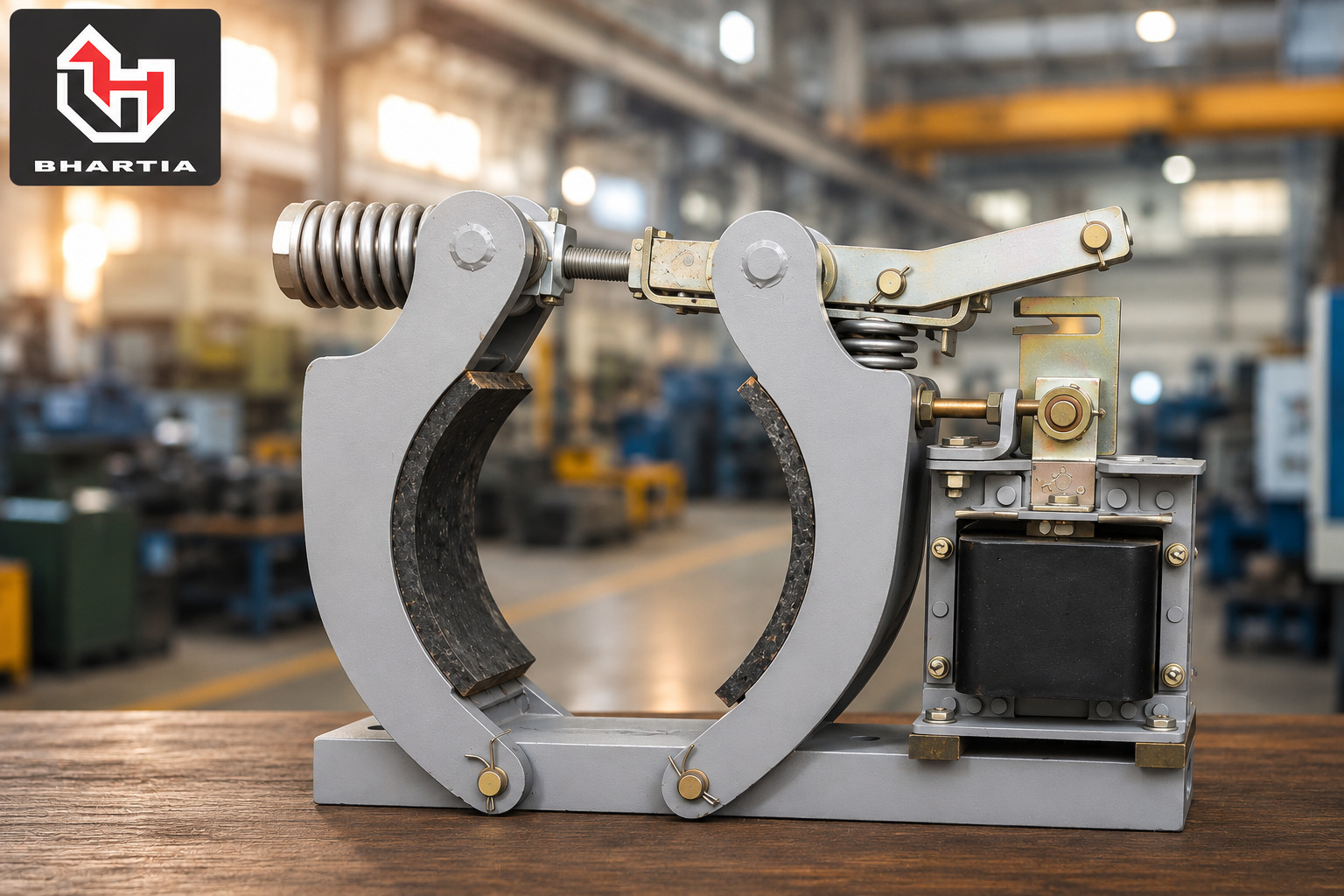
An AC solenoid brake is used in industrial machines where the motor, load and control circuit must work together during starting, stopping and holding. The search for AC solenoid brake usually comes from a practical need: a design review, a purchase comparison, a maintenance check, or a shutdown job where the team needs to confirm whether the selected brake will suit the machine duty.
In cranes, hoists, conveyors and heavy machinery, the brake is rarely a stand-alone item. It has to match the load, stopping frequency, ambient temperature, mounting position and the way the panel controls the motor. A good selection also considers supporting devices such as Contactors and Limit Switches, because these devices often work in the same control sequence.
Quick answer: what is an AC solenoid brake?
An AC solenoid brake is an electromechanical braking device that uses an AC-powered solenoid to operate a brake mechanism. When the coil is energized, it creates magnetic force that moves an armature or plunger. This movement is transferred through mechanical parts so the brake can release or apply braking force depending on the design.
For industrial selection, the main decision is not only the current rating or frame size. The duty matters more. Review the load, braking torque, coil voltage, duty cycle, switching frequency, air gap, mounting arrangement, ambient conditions and maintenance access before comparing brake options.
Where does an AC solenoid brake fit in a machine control system?
A simple way to understand the system is to separate the jobs. The brake handles mechanical stopping or holding. The contactor switches electrical power in the motor or control circuit. The limit switch helps confirm machine position, travel limit or end-stop condition.
In a crane or hoist panel, these devices may operate in a timed sequence. The brake should release at the right point, the motor should start without fighting the brake, and the brake should apply when the machine needs to stop or hold the load. If any one part is mismatched, the result can be heat, delayed release, mechanical wear or repeated maintenance calls.
For teams reviewing motor-control design along with braking, BCH’s article on how motor starters work with contactors and overload relays gives useful background on how switching and protection devices fit into a motor circuit.
How does an AC solenoid brake work?
The working principle is direct, but the details decide reliability. When the AC coil receives voltage, it produces magnetic pull. That pull moves the plunger or armature. The movement acts through springs, levers or linkage to change the brake position. Friction surfaces then create the stopping or holding effect.
A typical operating sequence can be reviewed in four steps:
- Electrical command: the control circuit decides when the brake must release or apply.
- Magnetic actuation: the AC solenoid coil produces force and moves the plunger or armature.
- Mechanical transfer: linkage, springs and levers convert that movement into brake action.
- Friction and holding: shoes, pads, drum or disc surfaces create the stopping or holding effect.
This sequence should be checked against real machine behavior. A brake used a few times a day on a light-duty machine does not face the same heat, wear and alignment stress as a brake used repeatedly on a crane, hoist or material-handling system.
Main components of an AC solenoid brake
A brake specification may look electrical at first, but the device is also mechanical. The table below explains the main parts that should be reviewed during selection, installation and maintenance.
| Component | What it does | Why it matters |
| AC solenoid coil | Creates magnetic force when energized by AC supply. | Coil voltage, duty and heat rise affect performance and service life. |
| Armature or plunger | Moves when the coil is energized. | Travel, alignment and response time affect release and application behavior. |
| Springs and linkage | Transfer motion between the solenoid and brake mechanism. | Poor alignment or weak spring force can cause slow release, drag or uneven braking. |
| Brake shoes, pads, drum or disc | Create friction for stopping or holding. | Wear, contamination and heat affect braking margin. |
| Air gap and adjustment points | Set the working clearance for proper movement. | Incorrect air gap can increase heat, noise, delayed response and maintenance frequency. |
| Mounting and enclosure | Hold the brake in position and protect it from site conditions. | Dust, vibration, moisture and poor access can shorten operating life. |
Selection points that matter before buying
The safest brake selection starts with the machine duty. Current rating, coil voltage and frame size are important, but they do not tell the full story. A brake can look suitable in a catalog and still fail early if the load, operating frequency or environment is ignored.
1. Start with the load and stopping duty
Confirm the load weight, speed, inertia, stopping frequency and whether the brake is expected to stop, hold, or do both. Hoist duty is different from conveyor duty. Crane travel is different from a machine-tool positioning job.
2. Confirm coil voltage and control sequence
The coil voltage must match the control design. The release and apply sequence must also be correct. The brake should not release too early, apply too late, or fight the motor during start-stop cycles.
3. Check torque, air gap and mechanical travel
Braking torque needs a proper margin. Air gap, plunger travel and linkage movement affect how quickly and consistently the brake acts. Even a small mechanical misalignment can lead to slow release, noise, heat or uneven wear.
4. Review ambient conditions
Dust, humidity, heat, vibration, corrosive atmosphere and poor cable routing can change the life of the brake. Outdoor cranes, foundry equipment, mining areas and washdown zones need closer review before selection.
5. Make maintenance access visible before layout approval
Leave enough space for air-gap checks, liner replacement, wiring inspection and safe testing. A brake that is difficult to inspect often becomes expensive during shutdown work.
Industrial applications of AC solenoid brakes
AC solenoid brakes are used where controlled stopping or load holding is part of a repeatable operating cycle. They are common in material movement and machine-control environments where timing, torque margin and service access matter.
- Cranes and hoists: used for travel, lifting or holding duties where braking margin and timing are important.
- Heavy machinery control: used where motor movement, operator input and protection devices must work together.
- Conveyors and material handling systems: used to control stopping behavior and reduce unwanted movement.
- Machine tools and production equipment: used where repeatable stopping supports process accuracy and machine safety.
- Winches and lifting equipment: used where load holding and controlled release need careful coordination.
For a broader application view, the Heavy Machinery Control page is the most relevant BCH destination. For crane-specific panel planning, review Crane Control Panels and the AC Crane Control Panel page.
How AC solenoid brakes work with limit switches and contactors
An AC solenoid brake provides the mechanical stopping or holding action. A contactor switches electrical power in the motor or control circuit. A limit switch helps the machine confirm position, travel limit or end-stop condition. In cranes and hoists, all three may affect the same movement cycle.
For example, a contactor may control motor operation while the brake releases or applies at the right point. A limit switch may prevent overtravel or help stop movement at a defined position. If the brake is chosen without checking the control sequence, the machine may start roughly, stop late, overheat or need frequent adjustment.
For related reading, BCH has separate guides on limit switches and industrial automation and contactor selection for industrial motor control. These pages are useful when the brake is being reviewed as part of a wider panel or machine-control design.
Common mistakes that show up after commissioning
Most brake complaints start with small assumptions made during selection or installation. These are the issues that often return during maintenance reviews:
- Selecting the brake only by coil voltage, current or frame size.
- Ignoring actual stopping frequency, load inertia and holding duty.
- Leaving too little torque margin for crane, hoist or heavy machinery duty.
- Forgetting air-gap checks, liner wear and mechanical travel during maintenance planning.
- Treating the brake separately from contactors, limit switches, overload protection and panel layout.
- Using a layout that makes testing or replacement difficult during shutdown work.
These mistakes can lead to heat, nuisance trips, slow release, uneven wear, repeated adjustment, awkward access or short service life. The brake may be a suitable product, but the application can still be wrong if the duty is not clear.
Field checklist before final selection
Before a model is compared, use this checklist to keep the discussion tied to the site condition:
- What load does the brake need to stop or hold?
- What is the required braking torque and expected safety margin?
- How often will the brake operate in one hour or one shift?
- What coil voltage and control sequence will the panel use?
- Is the brake linked with motor contactors, overload relays or a crane control panel?
- Are limit switches required for end-position or overtravel protection?
- What are the ambient temperature, dust, moisture and vibration levels?
- Is there enough space for air-gap checks, wiring, testing and liner replacement?
- Are spare parts and maintenance access clear before commissioning?
When should you compare AC solenoid brake options?
Compare brake options after the duty is clear. Once the load, torque, coil voltage, operating cycle, mounting arrangement and environment are known, the AC Solenoid Brakes page can be used to review the available product direction and move the discussion toward the right specification.
If the machine is part of a larger control system, review the supporting devices at the same time. Use the BCH Contactors for switching requirements and the Limit Switches for position or travel sensing. For application-specific support, Contact Us is the right next step.
FAQs
What should I review first before choosing an AC solenoid brake?
Start with the application duty. Confirm the load, speed, stopping frequency, holding requirement, coil voltage, ambient conditions and service access. After that, compare torque, air gap, mechanical travel and mounting fit.
Can an AC solenoid brake be selected only by current rating or frame size?
No. Current rating and frame size are only part of the selection. Duty cycle, braking torque, load behavior, control sequence, heat, environment and maintenance access also affect performance and service life.
Where are AC solenoid brakes commonly used?
They are commonly used in cranes, hoists, conveyors, winches, machine tools and heavy machinery control systems where controlled stopping or load holding is needed.
How are AC solenoid brakes connected with contactors and limit switches?
The brake provides mechanical stopping or holding. The contactor switches power in the motor or control circuit. The limit switch supports position or travel sensing. In cranes and hoists, these devices often work together in the same operating sequence.
What causes heat or short service life in an AC solenoid brake?
Common causes include wrong duty selection, poor air-gap setting, weak torque margin, frequent cycling beyond the intended duty, dust or moisture exposure, mechanical misalignment and limited maintenance access.
